Showing posts with label VR. Show all posts

Thursday, January 26, 2017

Hugo Barra Joins Facebook; Will 'Lead All VR Efforts'

Hugo Barra Mark Zuckerberg Facebook

Xiaomi's Global Vice President Hugo Barra, who is leaving the Chinese company to head back to the Silicon Valley, is joining Facebook. Mark Zuckerberg made this announcement via the social network on Wednesday.

Zuckerberg said in his Facebook post said that he is "excited that Hugo Barra is joining Facebook to lead all of our virtual reality efforts, including our Oculus team."

He adds, "Hugo shares my belief that virtual and augmented reality will be the next major computing platform. They'll enable us to experience completely new things and be more creative than ever before. Hugo is going to help build that future, and I'm looking forward to having him on our team."

Hugo Barra Xiaomi

Hugo Barra, who's globally been the face of Xiaomi ever since he joined the company after leaving Google around three and a half years ago, announced his exit from the company via Facebook earlier this week stating health and other personal reasons.

Before he was the face of Xiaomi, Hugo Barra was the Vice President of Product Development for Android at Google.


Source: Facebook
Follow Me on Twitter>>>> @iamBhavish
And like us on Facebook>>> The Gud1

Tuesday, January 3, 2017

Lenovo Legion Gaming Laptops, Lenovo VR Headset Unveiled Ahead of CES 2017


At CES 2017, Lenovo introduced a sub-brand called Lenovo Legion dedicated only to gaming PCs and launched two new laptops made with the feedback received from the gaming community. To further its gaming efforts, Lenovo also unveiled its first ever VR headset that intends to work with the Windows Holographic program as well.

The Lenovo Legion laptops are targeted mainly at gamers, and they look to offer good graphics performance, powerful processors, and efficient cooling systems. The first two laptops to flag off the series include the Lenovo Legion Y720 and Legion Y520.


Let's talk about the Lenovo Legion Y720 laptop first! The Legion Y720 can be powered with up to seventh generation Intel Core i7 processors and Nvidia GeForce GTX 1060 with 6GB of GDDR5 video RAM, making it VR compatible as well.

The laptop sports a 15.6-inch UHD (3840x2160 pixels) or full-HD (1920x1080 pixels) IPS display with anti-glare. It is said to be the world's first laptop to come with Dolby Atmos technology for superior audio quality. The laptop offers support for the Xbox One wireless controller and comes with an optimized thermal cooling system for keeping the laptop in cool even during intense game fights.

The Lenovo Legion Y720 laptop offers up to 16GB of DDR4 RAM, and you can customize the storage with 128GB, 256GB, 512GB of SSD, or 1TB, 2TB of HDD storage. Lenovo claims that the laptop offers five hours of battery life and weighs 3.2kgs. Connectivity options include the fast Thunderbolt 3 port.


Then comes the Lenovo Legion Y520 laptop. This laptop features a 15.6-inch full-HD (1920x1080 pixels) IPS display along with Anti-glare. It is also powered by up to seventh generation Intel Core i7 processors and up to a Nvidia GeForce GTX 1050 Ti graphics card. It offers the same storage and memory configurations as the Y720. The laptop comes with Harman speakers for good audio output and weighs only 2.4kg. Both the Legion Y720 and the Legion Y520 come with backlit keyboards for ease in gaming at night. While the Lenovo Legion Y520 laptop starts at $899.99 (roughly Rs. 61,500) and will be available sometime in February, the Lenovo Legion Y720 laptop starts at $1,399.99 (roughly Rs. 95,700) and will be available sometime in April.


Along with the Legion lineup, Lenovo also ventured into the VR segment with a demo of its first ever VR headset. The company has not announced any details of the headset, but it is reported to be priced below $400 (roughly Rs. 27,400) whenever it arrives. The design of the headset is such that the lens rests on your forehead instead of the nose. It uses two 1440x1440 pixels OLED panels for display and is said to be pretty lightweight in comparison to the Oculus Rift or HTC Vive. What's interesting is that the Lenovo VR headset will work with Microsoft's Windows Holographic Program.

Lenovo ahead of CES 2017 also launched the Thinkpad X1 Carbon, Thinkpad X1 Yoga, and the Thinkpad X1 Tablet as well. It also refreshed the Miix series with 12-inch Miix 720 tablet running on Windows 10. The Miix 720 comes with a detachable keyboard and a fold out kickstand for multi-purpose usage. All of these products will hit the market before April.

Source: Lenovo Newsroom
Follow Me on Twitter>>>> @iamBhavish
And like us on Facebook>>> The Gud1

Sunday, December 11, 2016

Xiaomi Mi VR Play Headset Launched at Rs. 999 ; Mi Live App Announced as well


Xiaomi unveiled the Mi VR Play headset in India priced at Rs. 999. The new Mi VR Play headset will be available via the company's store starting December 21. The company has confirmed that there will be limited edition Mi VR Play headsets also going up for sale.

Initially unveiled in China back in August, the Mi VR Play headset features a 'two-way zipper design' that the company claims makes it simple to insert and remove a smartphone into the headset, while also ensuring the phone does not fall out of the headset. Notably, in October, the company launched another plastic-built VR headset.

The Mi VR Play headset is Google Cardboard compatible and also allows users to view 360-degree YouTube videos and Mi Live VR live streams. The headset is also compatible with Google Cardboard Camera app that lets users click VR photos.


The Mi VR Play features Lycra material and comes with dual front openings for slight positioning adjustments and ventilation. The new headset is compatible with smartphones ranging from 4.7-inches to 5.7-inches. Xiaomi claims that the Mi VR Play headset can easily fit Mi Note as well as iPhone 6 and iPhone 6 Plus.

The headset sports anti-reflective lens for image clarity. The optical-grade aspheric lens has a high tolerance interval of 0.01mm. It also features a textured metal button which when pressed, a silicone button inside makes direct contact with the smartphone. The Mi VR Headset measures 201x107x91mm and weighs 208.7 grams. Xiaomi has also introduced non-slip pads into the VR headset.

Xiaomi also announced Mi Live, a live video streaming app, in India. The new app is now available via Google Play. Announcing the new Mi Live app, the company said, "Mi Live is our own live streaming app with locally sourced content and is open to viewing hosts from across the country."

Source: Xiaomi
Follow Me on Twitter>>>> @iamBhavish
And like us on Facebook>>> The Gud1

Friday, December 9, 2016

HTC Vive Studios Launched for Development of VR-Based Games and Apps

HTC's virtual reality headset Vive is one of the most advanced hardware products currently available in the category. Now, the company has shown further commitment towards virtual reality as it is said to have launched a new studio for the development of virtual reality content for its headset.

Alongside its Vive Studio, HTC has also launched its first title from the division - Arcade Saga, as per a report by VentureBeat. Arcade Saga was developed internally by company's 2 Bears Studios and is a collection of three games that make use of Vive's room-scale VR. The strategy behind creating the in-house VR content with Vive Studio is to push the sales of the hardware product over time, Vive Studio division's head Joel Breton told VB.


The Arcade Saga is already available for HTC Vive on Steam at $30 (roughly Rs. 2,000) and will be made available at company's VR app store Viveport in China. The company will be acting as a first-party publisher like Sony and Microsoft, who have their own studios to develop games for PlayStation and Xbox gaming consoles.

As per the report, the studio will not just create gaming content but also create content spread across categories like "education, cinematic, design, social, real-estate and sports as well as tools and applications that can revolutionise areas such as media, retail, health care, and location-based entertainment centres and arcades."

It will be interesting to see the content that is developed by Vive Studios going forward and whether it will be able to push the sales of the hardware or not.

Source: VentureBeat
Follow Me on Twitter>>>> @iamBhavish
And like us on Facebook>>> The Gud1

Thursday, November 10, 2016

Google Daydream View VR Headset Now Available


Google's Daydream View virtual reality headset is now available in US, UK, Canada, Australia, and Germany. Announced last month at the Google Pixel launch event, the Daydream View VR is the first headset based on the Daydream platform by Google, which was unveiled at Google I/O this year. As of now, Daydream View works only with the Google Pixel and Pixel XL smartphones.

Along with the Daydream View, Google has also launched a few supporting Android apps - the Daydream app and the YouTube VR app are now available for download via Google Play.

The Daydream app follows the Daydream Keyboard and VR Services that are already available on the Play Store. The Daydream app houses a collection of apps and games for Daydream-ready phones. Google is also launching exclusive content for the Daydream View. The company has partnered with video-game producers and sports leagues to boost its virtual-reality initiative. Google has also launched the YouTube VR app, which will let you watch 3D or standard 360-degree videos with the Daydream View headset. Google is collaborating with YouTube content creators for producing 360-degree videos for Daydream View.


Daydream users can search for videos in YouTube VR through voice or a keyboard much like the standard YouTube app.

More Daydream-ready apps are being launched apart from Google's own apps. The company's partners like Warner Brothers and CNN have also launched apps supporting Daydream like CNN VR, Fantastic Beasts, and The Guardian VR, among others.

Setting up the Daydream app will be straightforward and users will need to add a payment option to complete the setup.
Do Subscribe on YouTube!
Follow Me on Twitter>>>gt; @iamBhavish
And like us on Facebook>>> The Gud1

Wednesday, October 19, 2016

HTC Announces Viveport M VR App Store for Android Devices


Earlier this year, HTC had announced its virtual reality app store called Viveport, which would let the VR users access the latest VR content. Now, the company has announced a similar storefront exclusively for Android users. Termed HTC Viveport M, the store will be filled with VR apps and content for users, organized into categories. The store will feature content for all VR headsets and is not exclusive to HTC Vive VR headsets.

Unlike Viveport, which is accessible through browsers, PC apps, and even mobile apps; Viveport M is only meant for Android users. Viveport M is currently only available as a closed beta, meaning that only developers will be able to access it. However, HTC hints at commercial availability soon. It will first roll out in China, and then gradually make its way to the other markets.


This announcement was made at the joint Developer Forum of Alibaba Cloud's annual Computing Conference in China. The launch of Viveport M indicates HTC's seriousness towards VR moving forward. Apart from VR-centric apps, the store will feature 360-degree content for use with or without a special headset. HTC also announced the Viveport Arcade, a VR content management and sales platform customized for offline experience centers.

"Viveport Arcade will make it much easier for VR arcade operators to legally acquire the most compelling VR content available, while the system itself will allow both operators and developers to accurately share the revenue from end users. Pilot programs for Viveport Arcade have already been deployed in a number of locations in the last 1-2 months and will soon expand to hundreds of gaming centers, amusement parks and karaoke bars across China and globally," the company said in a statement.

Do Subscribe on YouTube!
Follow Me on Twitter>>> @iamBhavish
And like us on Facebook>>> The Gud1

Recommended Video 


Friday, September 30, 2016

HTC Viveport VR store launches globally


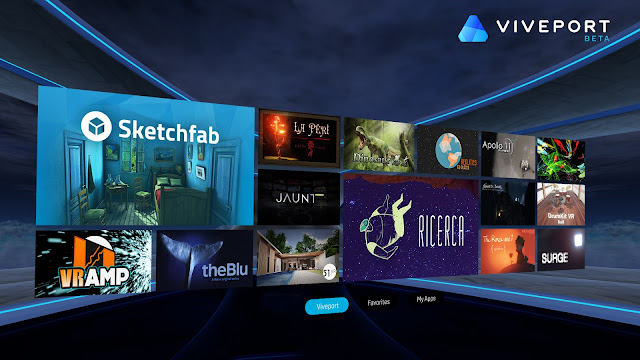
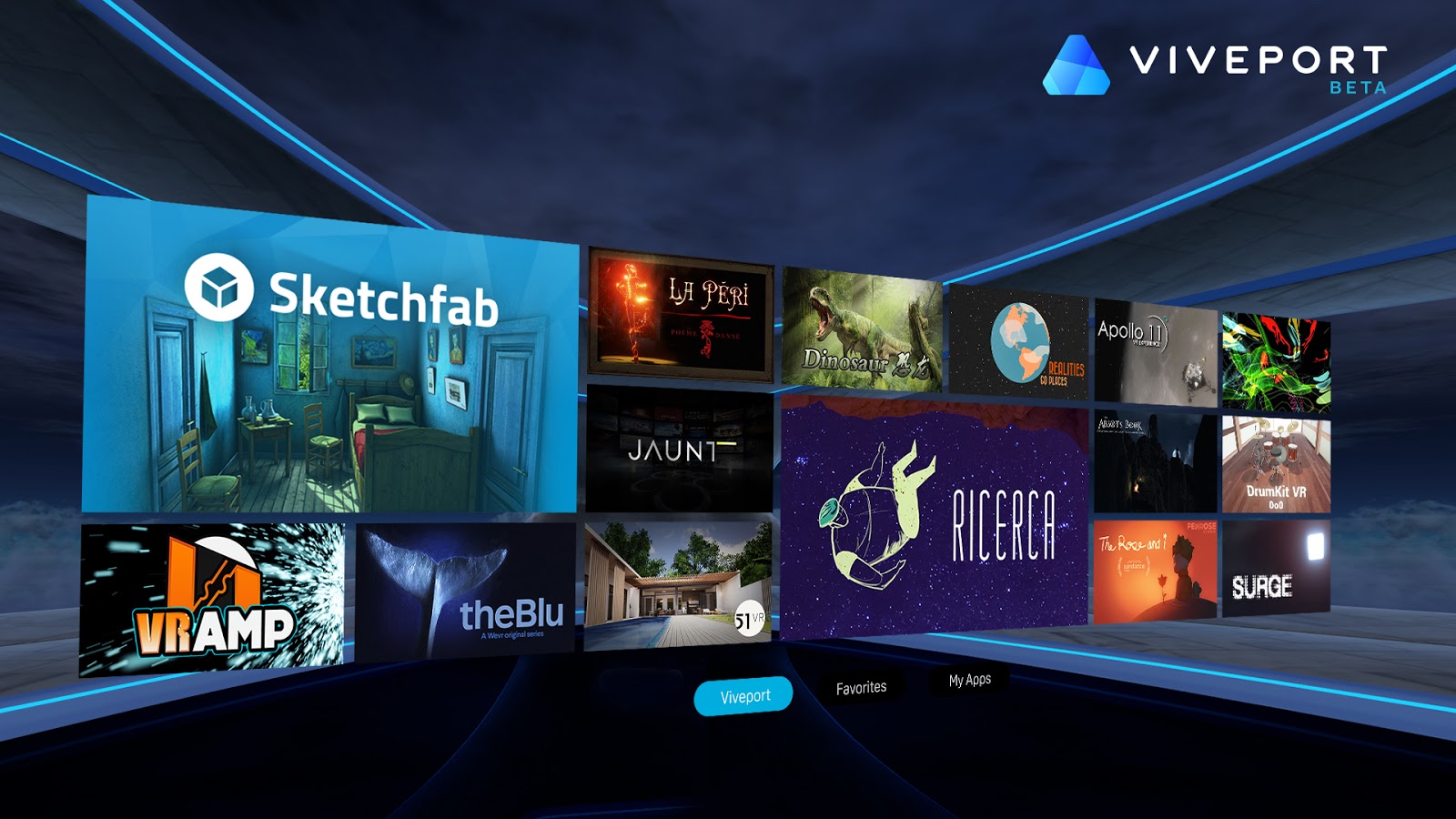
HTC is all set to launch the VivePort, a dedicated app store for VR fans. It will be launching in 30 countries globally today. The Viveport was previously open to users in China, and highlights some of the experiences on the Vive, HTC's VR headset.

HTC already teamed up with Valve to offer seamless access to VR games, but with this announcement, it is working on bringing in the cool non-gaming experiences to users. The Viveport already offers categories such as education, design, art, social, video, music, sports, health, fashion, travel, news, shopping, creativity tools, among others.

You will find content from The Blu, Google Spotlight Stories, Pearl, The Music Room, Everest VR and others. Besides, it includes the Viveport Community, wherein users can connect with other VR enthusiasts and influencers. Then there is Vive Home that allows to customize your personal space with the collection of objects, and more.


According to VentureBeat, the store has no Oculus VR titles yet but Rikard Steiber, President of Viveport has said to stay tuned for news on it in the future. The Vive is likely to get more competition with the launch of the PlayStation VR headset from Sony, expected on October 13.

As a promotional offer, HTC is offers 48-hour sale with popular titles being made available for as low as $1. Some of the discounted titles are theBlu, Mars Odyssey, and Firebird: La Peri.
Do Subscribe on YouTube!
Follow Me on Twitter>>> @iamBhavish
And like us on Facebook>>> The Gud1

Wednesday, September 14, 2016

MSI's VR One is a Pascal-powered PC with NVIDIA's GeForce GTX 10-series in a backpack


Companies such as Oculus and HTC have ushered in the emerging era of Virtual Reality through its Oculus Rift and HTC Vive. Though these systems require you to tether the headset to a extremely powerful PC. Enter, MSI. Micro-Star International or MSI's new VR One backpack cuts that cord, or at least redirects it to a PC that you wear on your back.

Pitched as the the world's lightest and thinnest backpack PC system, MSI and HTC VIVE team expect the VR One to have an enormous impact on the global VR market. The platform will offer VR experience without the need of staying close to the PC and monitor's cable connection. It's a concept that MSI has been working on throughout the year and is has now showed off at the Tokyo Game Show.

You may say wearing a laptop on your back and dancing around immersed in VR doesn't sound all that appealing, but the VR One just weighs 3.6kg, comes with two battery packs and delivers up to 1.5 hours of gameplay.
Powered by an i7 overclocked CPU and GeForce GTX 10 series graphics card, it's cooling system only produces 40dBA of noise thanks to its 90mm fans and nine heat pipes. Like with the MSI Vortex, the VR One is entirely HTC Vive optimized which means it has some high-end specs.

The VR backpack features one HDMI port, one Mini DisplayPort, and one USB Type-C port supporting Thunderbolt 3 to support VR experience with over 90FPS for any high-end VR device. Four USB 3.0 ports a microphone jack, and a headphone jack are also available.

Equipped with the newest MSI Dragon Center software, you'll be able to take complete control of your VR platform with one Click-VR key. It allows users to adjust and manage MSI gaming features as well as monitoring the VR One's hardware status in details from your smartphone.


Plus, with SHIFT Technology users can boost performance and fan speed to achieve the best VR experience.

Finally considering the VR One's looks, MSI says it ran with a "futuristic robot machine style." It's going to draw inevitable comparisons to a proton pack from Ghostbusters, especially now that a remade version of the classic movie is introducing Ghostbusters to a whole new generation.

Source: MSI
Do Subscribe on YouTube!
Follow Me on Twitter>>> @iamBhavish
And like us on Facebook>>> The Gud1

Thursday, August 18, 2016

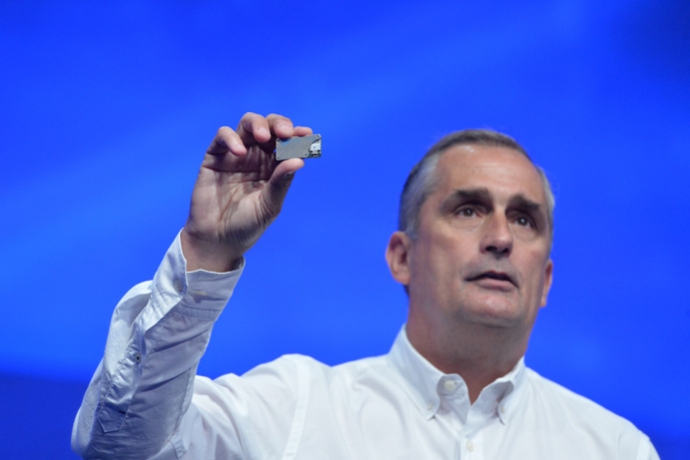
Intel Joule is a high performance Atom-powered IoT module targetted at hardware developers


Intel's Developer Forum (IDF) is underway at San Francisco, and Intel has some good news for hardware developers working in the IoT space. It has unveiled Joule, which is a high performance Atom powered IoT kit. Intel Joule is the successor to the Intel's Galileo, Edison and Curie line of IoT kits which were based on the Intel Quark SoC

Intel is hoping the Joule module to be used in applications as varied as drones, robotics and with support from Intel's RealSense technology to be used in VR and AR applications as well. There isn't much detail on the graphics processing power of the Joule, but according to some websites, the Joule supports 4K video capture and display.
The Intel Joule comprises two variants – the Joule 570X and Joule 550X. Unlike its predecessors which were based on a combination of Atom Silvermont cores and low power Quark CPU cores, the Joule uses Intel's Broxton-M platform – which was initially meant to be used in consumer devices but was cancelled when Intel decided to move out of the mobile chipsets space.

Both the variants use the Intel Atom Broxton-M SoC but with varying clock speeds. The Joule 570X uses 4x Goldmont cores clocked at 1.7GHz which can turbo to 2.4GHz and this is paired with 4GB of LPDDR4 RAM and 16GB eMMC storage. On the other hand the Joule 550X uses 4x Goldmont cores clocked at 1.5GHz with no turbo feature, along with 3GB LPDDR4 RAM and 8GB eMMC storage option.

Both the Joule 570X and Joule 550X come support 802.11ac Wi-Fi along with Bluetooth 4.1. The I/O connectivity options are also similar for both the boards such as USB 3.0, GPIO, UART, MIPI camera and display interfaces and so on. The board measures 48 x 24 x 3.5mm. This is slightly larger than the Intel Edison board.


The Intel Joule will support different operating systems, with a new Linux distro meant specifically for this hardware being the default OS. Intel is calling it the Reference Linux OS for IoT. Canonical Ubuntu Core, Windows 10 IoT Core are also supported.

The Intel Joule 570X is on sale for $369 which comes to approx Rs 25,000, and will be available with Intel partners from next month.


Do Subscribe on YouTube!
Follow Me on Twitter>>> @iamBhavish
And like us on Facebook>>> The Gud1

Saturday, August 6, 2016

HTC Announces Viveport VR App Store: What You Need to Know


HTC on Friday announced Viveport, its storefront for VR content and experiences. The service will be rolled out this fall, and a developer beta will be launching soon. The Viveport will be a destination for all HTC Vive users to access the latest VR content, organised into categories. The company also announced the Vive Home, a customisable personal virtual environment.

"Our mission is to unleash human imagination from the limitations of reality, and Viveport will be an important cornerstone in democratizing access to the world's most diverse selection of immersive experiences," said Cher Wang, CEO of HTC.

Interestingly, while HTC certainly wants Vive users to make use of Viveport, it is not designing this as an exclusive experience. What this means is twofold - first, if you already have a Vive, then you can also use Steam as a store for VR content. Steam, by Valve, HTC's partner on Vive, is one of the best known and most full-featured game store and having access to Steam as a distribution can be seen as a major plus point for the Vive.

At the same time, Steam doesn't have much of a user base in some parts of the world - it's not used very heavily in China, for example. Viveport can smooth over these gaps, and apart from that, it's an experience that's built from the ground up with VR in mind, making it easier and more intuitive to find and access new VR content. That's the plan anyway.


The store will also be accessible through browsers, and via PC and mobile apps, and that's the second way in which the Viveport is an open platform. According to HTC, the content on the Viveport will not be exclusive to the Vive.

"We want to reach audiences on all devices and platforms," an HTC executive explained. "We are on the Vive right now, and we will look at adding support for more platforms." Also, while some of the content on Viveport would not work properly on its big rival, the Rift, that's because Oculus' offering does not support room-scale tracking in the same way. The seated 360-degree experiences should work in much the same way on both devices. That's a far cry from the Rift, which Facebook-owned Oculus was initially trying to lock down. You couldn't even run Rift games on the Vive, which changed only after fan outrage. In contrast, HTC seems more willing to embrace an 'open' world.

"We believe equal access to virtual reality experiences will make the world a better place; enhancing our daily lives and the way we connect with everything. An important goal for the Viveport team is to enable developers to reach a global audience and grow their business," said Rikard Steiber, Senior Vice President of Viveport.

The company will also be rolling out all content globally, so as long as you're in a country where the Vive is officially being sold, the Viveport and all the content it sells will be accessible too.


The company also talked about special bundles for education, and while HTC does not expect hardware bundles for educational institutions in the short term, it didn't rule it out as a long term possibility. The Viveport team was also quick to talk about the ways in which the headset can be used for education, and not just for gaming.

"There's an app called Lifeliqe, where, it can transport - not just the students, but also their teacher, into the past," an executive explained, "and they can see for example the dinosaurs, so it's like Jurassic Park, and the teacher can explain things and educate the class in this really immersive environment."

Viveport will feature a wide range of VR experiences across education, design, art, social, video, music, sports, health, fashion, travel, news, shopping, creativity tools, and more. There will be a mix of paid and free content, and support for options such as in-app purchases and subscriptions as well, so it should be a full-fledged app store from its launch later this year.

Do Subscribe on YouTube!
Follow Me on Twitter>>> @iamBhavish
And like us on Facebook>>> The Gud1

Friday, June 3, 2016

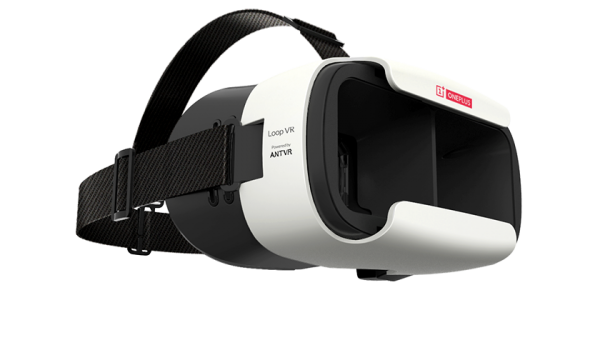
OnePlus Loop VR headset sold out in less than 1 minute

The OnePlus Loop VR headset, developed with Ant VR for people to experience the launch of the OnePlus 3 in a virtual space station sold out in less than 1 minute on Amazon India today. The sale started today at 12 PM and was sold out before the clock hit 12:01 PM. This headset was being offered free (almost) with the shipping cost being Rs 1.

The sale was limited to the Amazon App and the anticipation for the latest flagship from OnePlus, the OnePlus 3 can only be guessed by the speed at which the VR headsets sold out (along with the waitlist being full). We tried purchasing the OnePlus Loop VR headset via the the waitlist at 12:15 but could not get hold of one out here as well. There are no official numbers available at the moment, but we do know that there were a total of 30,000 headsets available worldwide. So it is safe to say that the number must have been more than a thousand.


The second batch of free OnePlus VR headsets will sold on 7 June, 2016 at 12PM. Head to this link to register yourself if you have not registered already. The sale will only be available for registered users. The VR headset boasts 100-degree field of view along with a Orthoscopic Lens and compatibility for most phones with display sizes between 5 to 6 inches. The headset only weighs about 366 grams, minimizing any problems for the user in terms of the weight.
This comes right after the OnePlus VR Launch App was rolled out along with the announcement that the OnePlus 3 will be available invite-free right from the launch.

Friday, May 27, 2016

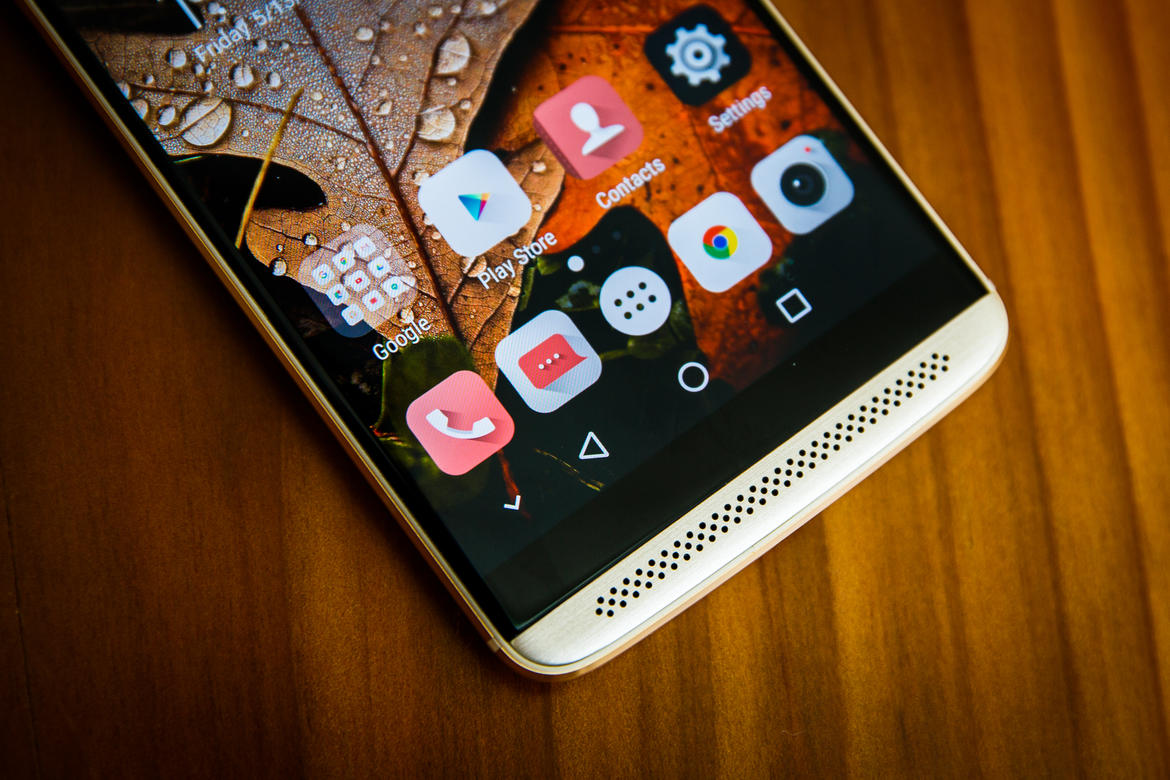
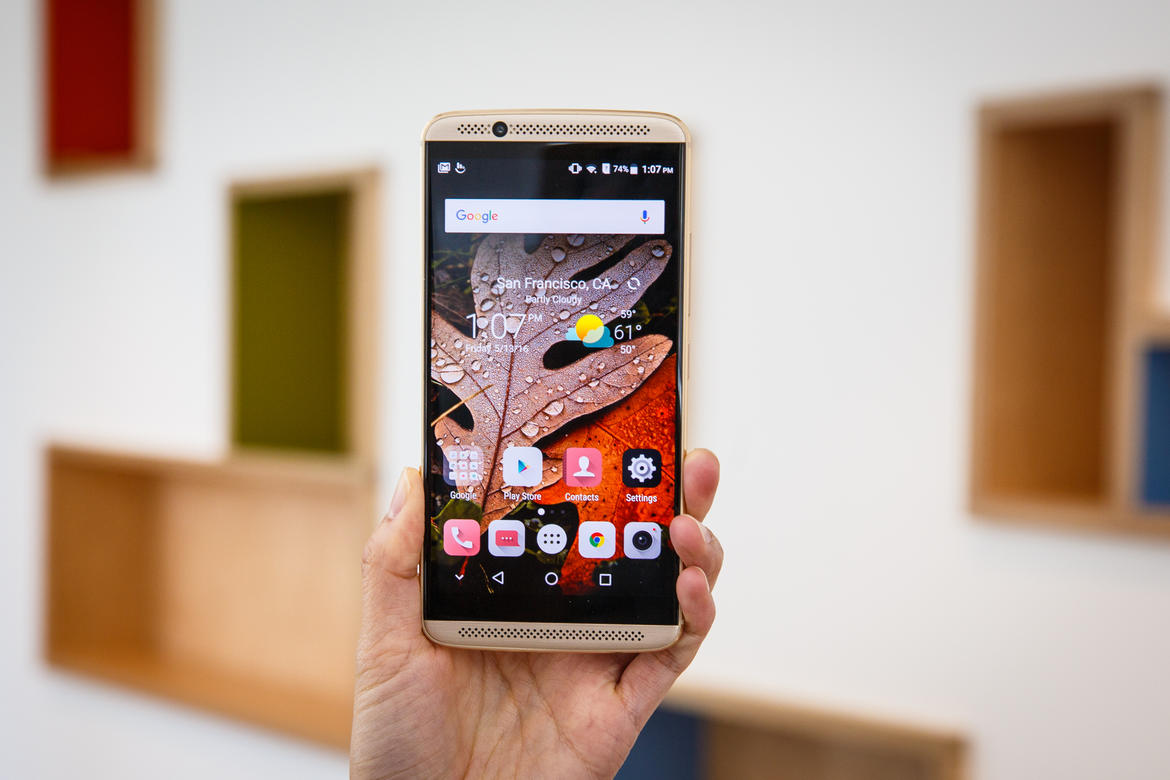
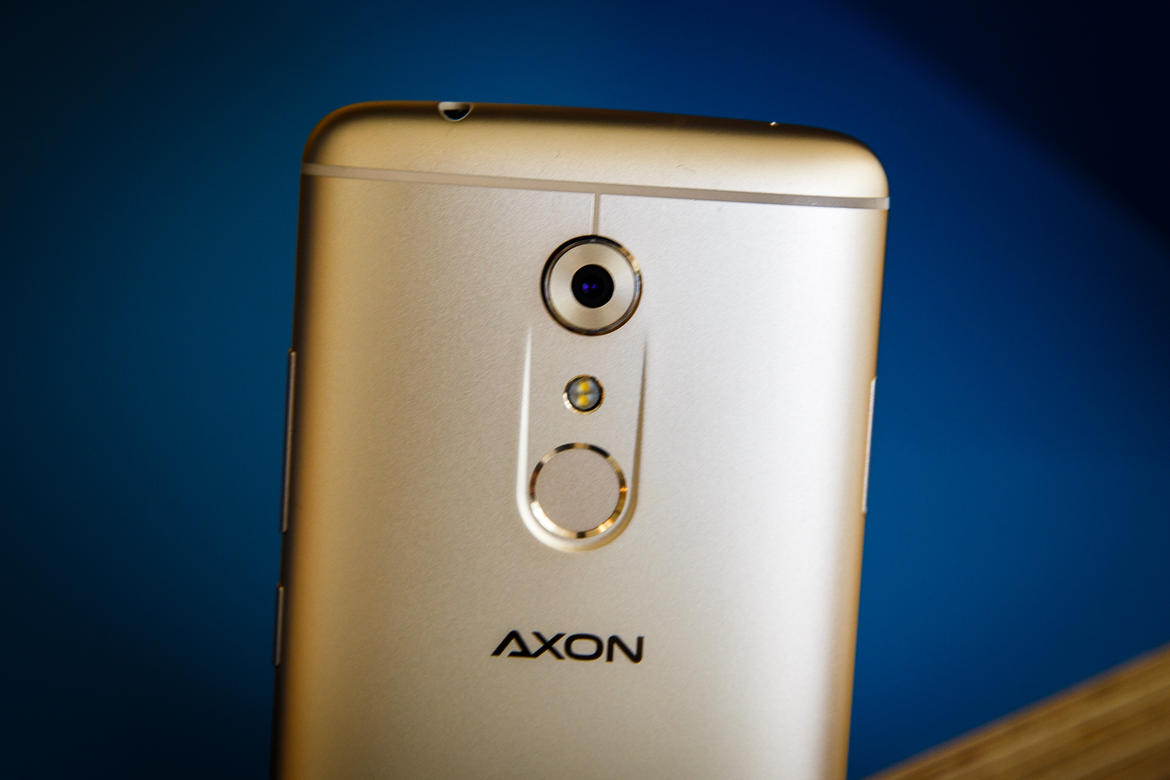
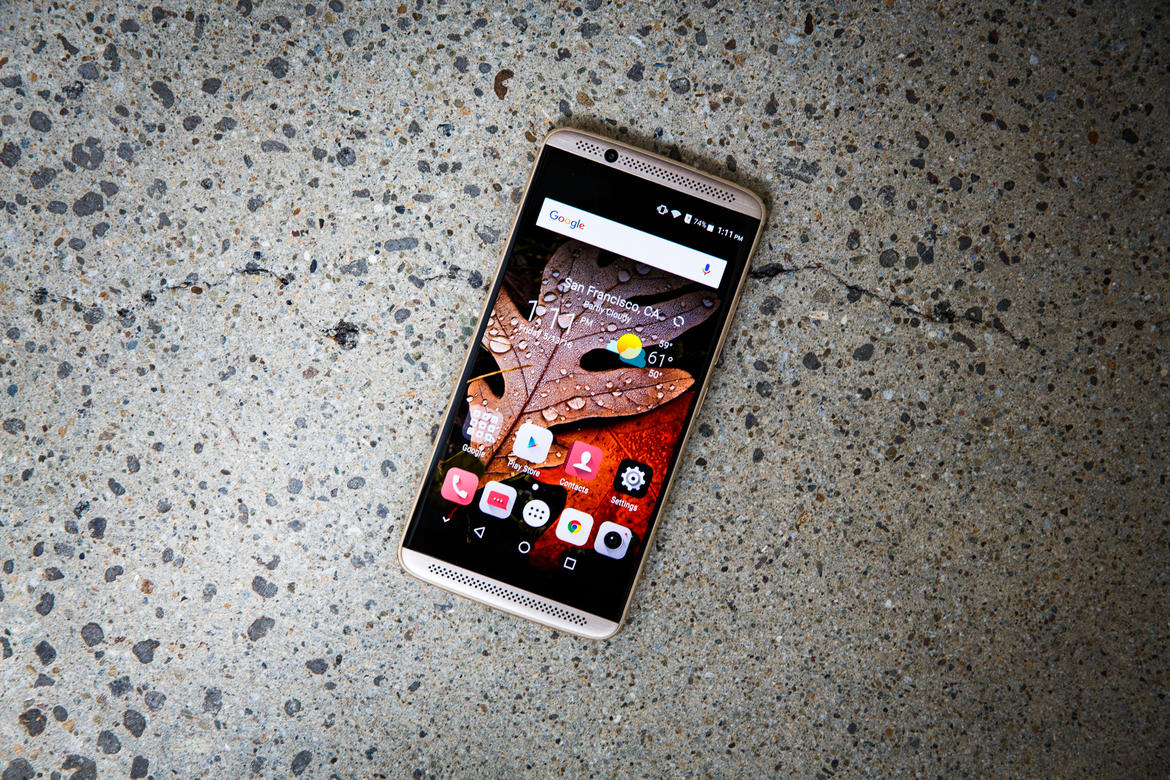
ZTE Axon 7 With 5.5-Inch Display, 4GB RAM Launched; $450 alternative to other flagships


Last year, ZTE surprised us with the Axon, an all-metal Android phone with surprisingly high-end specs for just $450. But while it was a noble attempt at an affordable flagship, we had issues with its slightly chunky design and lack of storage. Enter the Axon 7, ZTE's follow-up that once again aims to take on much more expensive Android phones. The device has been made available for pre-orders in the Chinese market, and will be available for purchase online and retail stores on June 2. The smartphone should make its way to US stores soon as well, like the previous generation.

The Axon 7 is available in three variants - Basic, Standard, and Premium. The Basic variant is priced at CNY 2,899(roughly Rs. 29,600), the Standard at CNY 3,299 (roughly Rs.33,800), and Premium at CNY 4,099 (roughly Rs. 42,000). The Premium variant comes with a Force Touch pressure sensitive display.


Coming to the specs, the ZTE Axon 7 dons an aluminium unibody, and runs on Android 6.0 Marshmallow with MiFavor UI 4.0 on top. It supports hybrid dual-SIM, and features a 5.5-inch QHD Super Amoled display. It is powered by the 2.2GHz Qualcomm Snapdragon 820 (MSM8996) quad-core SoC with Adreno 530 GPU and 4GB RAM.

On the camera front, the ZTE Axon 7 has a 20-megapixel rear camera with dual-LED flash, f/1.8 aperture, and OIS+ EIS+ PDAF. It captures 4K video at 30fps, and slow motion is captured at 720p at 240fps/480p at 300fps. The selfie camera is at 8-megapixel. Onboard, there is 64GB of inbuilt storage, which can be extended via microSD card (up to 128GB).


It packs a 3140mAh battery with Quick Charge 3.0. The company claims that the battery can last up to 16 hours of talktime, and 360 hours of standby time. The Quick Charge feature can recharge the Axon 7 up to 50 percent in just 30 minutes. Connectivity options include USB Type-C port, NFC, Bluetooth, Wi-Fi, and 4G LTE. The fingerprint sensor is at the back of the smartphone.

ZTE is betting big on the audio output of the Axon 7. It houses dual speakers, M-Base support material, and claims to bring high fidelity sound performance. ZTE has even made renowned pianist Lang Lang as the brand ambassador of its Axon series.


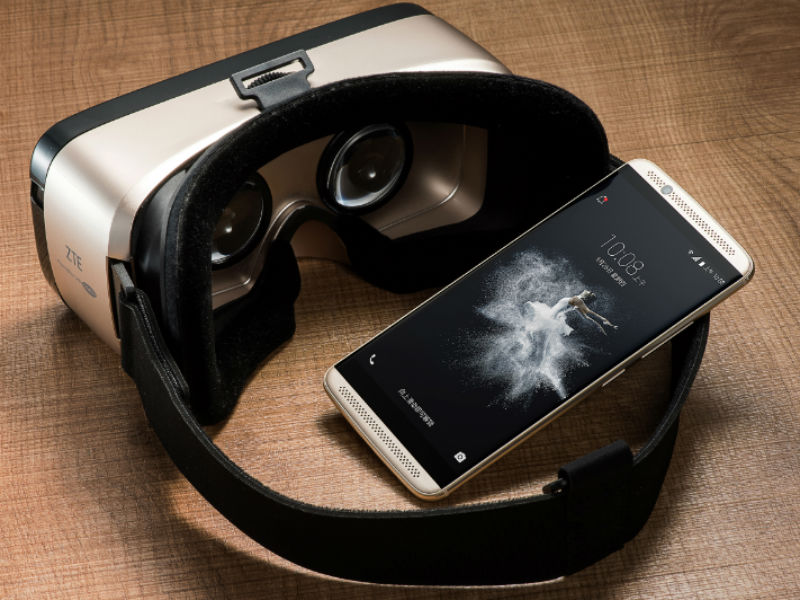
The company announced that the Axon 7 will receive the Android N update, when it arrives later in the year, and will support Google's DayDream VR. Alongside the Axon 7, the company even unveiled the ZTE VR headset, but said little about the availability and tech details. The headset is priced at CNY 518 (roughly Rs. 5,300).


Follow Me on Twitter>>> @iamBhavish
And like us on Facebook>>> The Gud1