Google recently rolled out Android 7.1.1 Nougat update to the supported Nexus and Pixel devices. One of the key features that came along with the update was the support for GIF images directly from the keyboard.
Although Google already provided support for GIF images from its Gboard keyboard app on iOS, this feature was absent on Android devices until the latest update. Now the feature can be used on even more devices as Gboard app has finally made its way to other Android devices as well, as an update to the Google Keyboard app.
Ironically, the search giant's well-received Gboard keyboard app was exclusive to iOS and absent from its own mobile platform till now. Now, Gboard has come to Android as a version 6.0 update to Google Keyboard app. Along with the name change, Gboard brings along the G button for quick search from the keyboard. When the G button is disabled, you will see a pop-out toolbar for access to themes, settings, and one-handed mode.
The GIF button is always visible but is disabled in apps that don't support the feature. Other features on Gboard include Glide typing, emoji search, optional dedicated number row, and more. Gboard supports multiple languages and users can choose up to three active languages with a preference for one.
Like most updates, Google is expected to roll out the v6.0 update for Google Keyboard app in phases over the next few days via the Google Play. However, if you are too impatient to try out the new Gboard keyboard from Google, you can always download an APK installation file via APK Mirror.
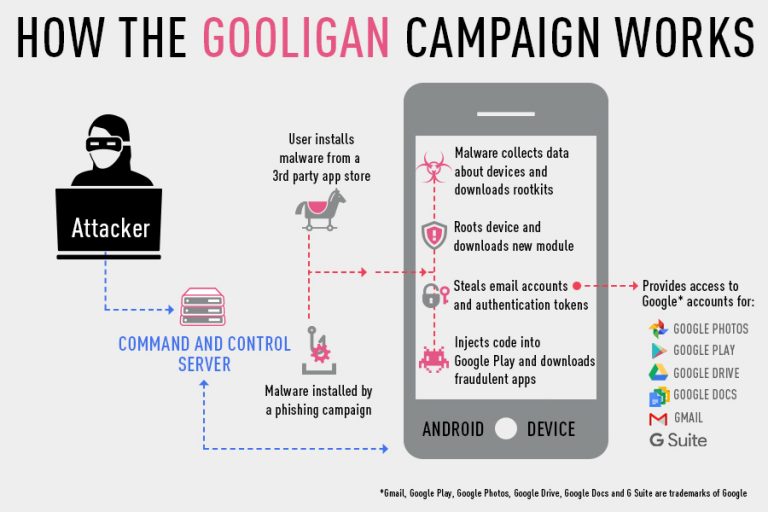
Google's Android OS has always faced public wrath for its security vulnerabilities and looks like that it's bound to continue for some more time now. Security researchers from Check Point Software Technologies have found this new malware family, that it is calling Gooligan, has comprised about 1 million accounts.
It is found in at least 86 apps that are available in third-party marketplaces. Once installed, it uses a rooting process to gains an insider access to your system. It is said to affect devices running Android versions 4+. It should be noted that the vulnerable versions account for 74 percent of users.
So, the rooted devices will then download and install the software that steals authentication tokens and gives it access to the device owner's Google-related accounts without the need to enter the password. These tokens will work on several Google products including Gmail, Google Photos, Google Docs, Google Play, Google Drive and G Suite.
Basically, a Google authorization token is a way to access the Google account and the related services of a user that is issued by Google. Once stolen by a hacker, they can use this token to access all your Google services.
Is my Device Affected?
If you have been downloading apps from sources apart from the official Play Store, and want to check if your account is compromised, you can do so at gooligan.checkpoint.com .
You could also Check this list of apps, if you have downloaded any one of these then your device is infected.
Oh No, My Device is Affected. What do I do now?
Check Point reports lists out two things that you would have to do. Firstly, a clean installation of the operating system on your mobile device i.e. "flashing" a cleaner operating system.
This is a complex process, and it is recommended that users approach a certified technician/mobile service provider if they have no knowledge. Secondly. change your Google account passwords as soon as possible.
I would personally like to advise all the readers to not download Android apps from third-party stores.
Alphabet's Nest is a home & design company that makes high-performance HD cameras for indoor and outdoor surveillance. In what appears to be an upgrade to integrate users' home camera feeds with Android TV, and Apple TV, Nest has introduced an update to its app platform that will allow its users to stream Nest Cam feeds directly to their Apple TV units, while introducing a new video clip creation and sharing feature called "instaclip." Other improvements like activity notifications and a tweaked user interface also arrive for iOS 10 with Nest version 5.9.
According to a blog post on Thursday, instaclips can be used to capture and share impromptu holiday moments with friends and family. Powered by subscription service Nest Aware — a requirement for instaclips to work — the feature automatically detects potentially interesting action to create a short clip viewable in the Nest app.
Tapping on the "clip" icon generates a clip while pressing and holding the same button lets users customise a clip's length. Instaclips can be uploaded to a customer's online archive, or stored on their iOS device for sharing.
In addition to instaclips, iOS users now get snapshots alongside activity alerts, a feature previously limited to Android devices. Those with Nest Aware are also to receive short video clips viewable within a notification pane. The app also includes a new button that switches Nest Cam video feeds and history between fullscreen and portrait viewing modes without forcing users to rotate their iPhone.
Finally, fourth-generation Apple TV owners can download the new Nest tvOS app to access to live Nest Cam video feeds on the big screen. The app supports multiple homes linked to a single account and is capable of displaying four live camera feeds on a single screen. Nest Aware customers also have access to history archives with activity indicators.
Nest on Thursday said Apple TV functionality was "coming soon," though the app and service appear to be live in the tvOS App Store.
Google has announced the launch of a new product, PhotoScan to help you scan and digitise old photographs. The new product is powered by Google Photos and ensures that the old photos scanned by PhotoScan will be clear and glare-free which usually happens when we try taking images of old photographs using the smartphone.
The app can detect edges, straighten the orientation, straighten and rotate the picture to scan them as properly as possible. The app uses augmented reality to create four points near the frame of the photo and uses the four photos to create an image composite without glare. The setup of the app is simple as it gives instructions on how to use the app properly. After you capture the image and the app creates a composite, you can adjust the corners and rotate the picture to your satisfaction.
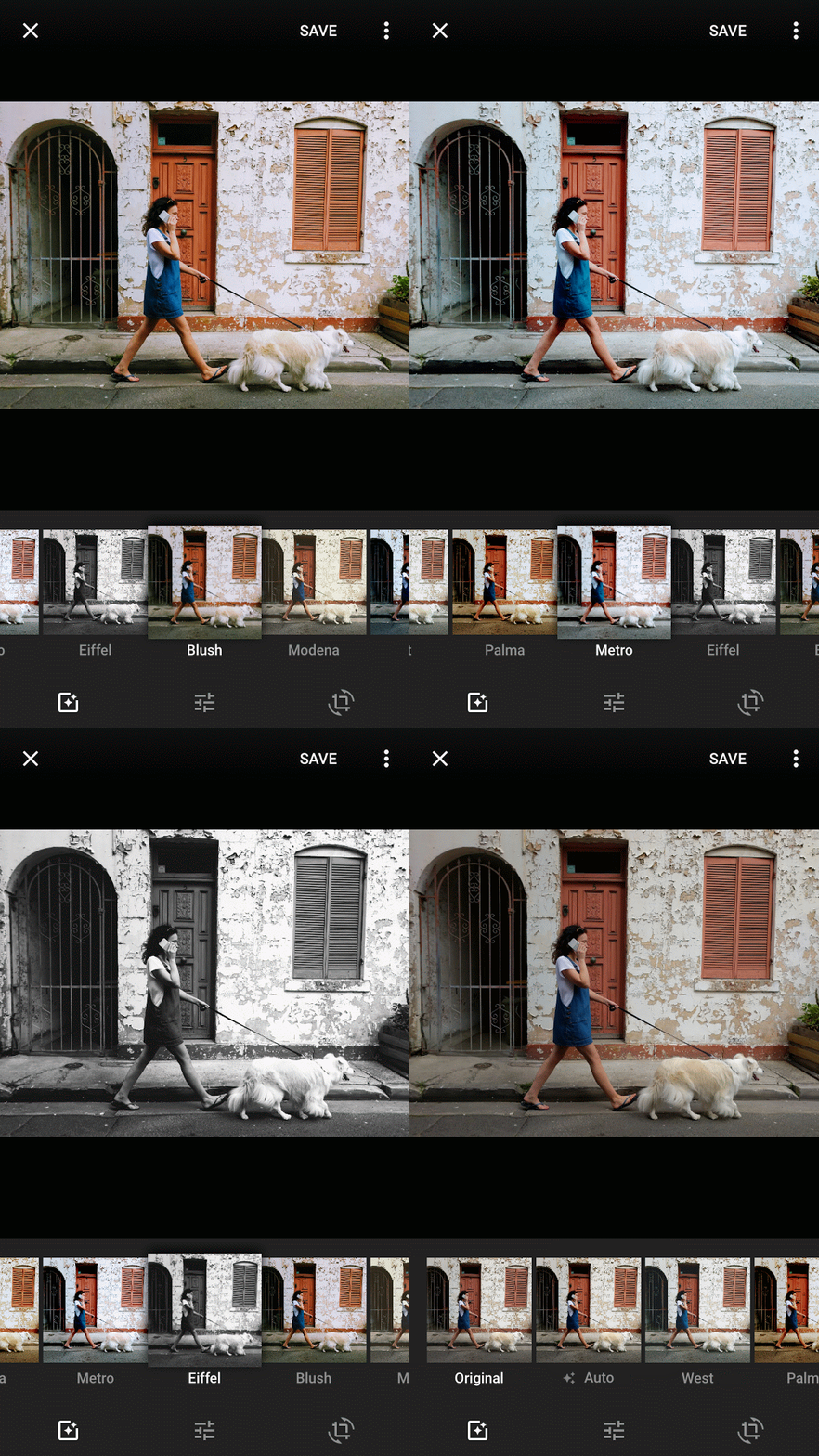
The image is saved in the app, and you can save multiple apps at the same time to the phone storage after you are done. The scanned images can be saved to Google Photos for secure digital backup in hight quality. Google has launched the app for both Android and iOS users. Users can then open the saved photo in Google Photos to auto enhance, apply styles or edit light and colour in the pictures.
PhotoScan is being released as part of a broader update to Google Photos today that also includes new editing tools and automatically generated movies. The core Google Photos app now has a new "auto-enhance" feature that the company says does a better job in enhancing your photos with one tap. It also now has a series of filters, called "looks," that make different adjustments depending on the content of the photo. Photos with faces might get one treatment; landscapes will get another. You can also make fine-grained adjustments to your photos using new sliders under the existing "light," "color," and "pop" tools.
Google Photos is also expanding the number of automatically generated movies it will make on your behalf depending on the photos you have in your library. The movies, which made their debut in September, will soon have three more kinds of movies in their collection: one for the first few months of a newborn’s life; one for formal occasions like weddings; and one called "through the years" that offers a slideshow of photos from annual events like Thanksgiving and Christmas. New movies should start popping up in users’ Google Photos accounts over the next few weeks and months, the company said. Download for Android Download for iOS
It was the PwnFest hacking competition, and at this event, a group of white hat hackers from Qihoo 360 managed to hack the sought after Google Pixel in less than a minute. They managed the task using an undisclosed zero-day vulnerability, raking in $120,000 (that is roughly Rs. 81 lakhs!) in cash.
The white hat hackers used the vulnerability to gain remote access to the Pixel smartphone. The vulnerability was used to install unwarranted code on the Google device, and then the exploit was used to open Google Play and Chrome browser (mobile version). On opening Chrome, instead of the homepage, a message that read "Pwned by 360 Alpha Team" was displayed on the screen.
By gaining remote access to the Pixel phone, hackers exposed all user data - including phone contacts, messages, emails, photos, videos and even card details.
Apart from this remote access, the Qihoo 360 team also managed to crack Adobe Flash in a matter of seconds, by using a combination of exploits. The Register reports that Flash was breached in four seconds flat, earning them the cash prize of $120,000 (roughly Rs. 81 lakhs) more. The company even demonstrated Microsoft Edge vulnerabilities on Windows 10. All in all, the team earned $520,000 (roughly Rs. 351 Lakhs) as prize money.
At the event, many other teams also showcased how they could breach many aspects of phones and PCs - be it browsing data, phone contacts, card details and more. Chinese hackers Pangu Team managed to breach the Safari browser running on macOS Sierra in a matter of 20 seconds. This feat earned them a $80,000 (roughly Rs. 54 Lakhs) cash prize.
Google's Daydream View virtual reality headset is now available in US, UK, Canada, Australia, and Germany. Announced last month at the Google Pixel launch event, the Daydream View VR is the first headset based on the Daydream platform by Google, which was unveiled at Google I/O this year. As of now, Daydream View works only with the Google Pixel and Pixel XL smartphones.
Along with the Daydream View, Google has also launched a few supporting Android apps - the Daydream app and the YouTube VR app are now available for download via Google Play.
The Daydream app follows the Daydream Keyboard and VR Services that are already available on the Play Store. The Daydream app houses a collection of apps and games for Daydream-ready phones. Google is also launching exclusive content for the Daydream View. The company has partnered with video-game producers and sports leagues to boost its virtual-reality initiative. Google has also launched the YouTube VR app, which will let you watch 3D or standard 360-degree videos with the Daydream View headset. Google is collaborating with YouTube content creators for producing 360-degree videos for Daydream View.
Daydream users can search for videos in YouTube VR through voice or a keyboard much like the standard YouTube app.
More Daydream-ready apps are being launched apart from Google's own apps. The company's partners like Warner Brothers and CNN have also launched apps supporting Daydream like CNN VR, Fantastic Beasts, and The Guardian VR, among others.
Setting up the Daydream app will be straightforward and users will need to add a payment option to complete the setup.
Google Map Maker is the latest Google product to be discontinued. Before you begin grieving, the good news here is that it'll be integrated with Google Maps, which means that just the standalone Map Maker tool will be discontinued. In a blog post, Google said this change will be carried out in March 2017.
If you don't know, Map Maker is Google's tool that lets you edit data in Google Maps. This is what allowed Google's community to update Google Maps much faster than any one entity can manage. Google's blog post reads: "Starting today, edits made on Google Maps will no longer be available for moderation on Map Maker. This will allow us to streamline our efforts, speeding up the time for an edit to get published."
The move intends to consolidate all maps data under one product and the Map Maker tool appears to have endured its usefulness for Google. "This update will enable us to focus on providing the best editing and moderation experience within Google Maps on both desktops and on mobile. We'll continue to roll out new features to make sure you're able to do most of the things you've grown accustomed to doing in Map Maker - like edit roads - leading up to March 2017 and after," the blog post adds.
If you want to continue to help improve Google Maps, Google says you should join the Local Guides program.
Eyefluence, which is working to enable eye movements to control digital screens, announced through its blog post on Monday that it's joining the search giant Alphabet Inc. The three-year-old startup, which had reportedly raised $21.6 million in funding, didn't disclose a price.
Jim Marggraff, the creator of the pioneering LeapPad tablet computer, started Eyefluence after buying up assets from neurological research firm Eye-Com.
The startup enables users wearing head-mounted virtual reality or augmented glasses to use their eyes as a mouse and making selections only with their eye movements. Functional eye-tracking is a widely desired feature in virtual reality and augmented reality, which lets digital images interact with the physical world.
As Google launches its DaydreamVR platform next month with its Daydream View headset, there is already attention being directed to its next-gen headset efforts. Google has also invested directly in Magic Leap, a startup that has also claimed to be working on an eye interaction technology.
Google has launched its wallpapers app, which was announced along with the launch of its Pixel smartphones, named simply 'Wallpapers'. This app is compatible with devices running Android 4.1 Jelly Bean and above but packs some exclusive features for devices running Android 7.0 Nougat and above.
You can choose wallpapers from a variety of sections like Earth, Landscapes, Cityscapes, Life, and Textures. Interestingly, the app even allows you to access other wallpaper apps on your device, as well as a gallery to choose an image as your next wallpaper. Google's app provides users with images from Google Earth, Google+, and other partners.
The Google Wallpapers app allows users on Android 7.0 Nougat and above to choose separate wallpapers for Home and lock screen while users on the previous versions of the operating system can only choose images for the home screen. Users also get the option to choose a particular category, from which their home screen wallpapers will be automatically updated by the app every single day.
The app is 2.3MB in size and has been released on Google Play store by the company right ahead of the release of its Pixel smartphones in the US on Thursday. If the initial user reviews of the app are to be considered, the app seems to have gotten off to a good start.
On a different note, the search giant has also made the developer preview of Android 7.1 Nougat available for Nexus 5X, Nexus 6P, and Pixel C devices, with more devices in line to receive the same soon.
Google and Monotype have together developed and released a font family called Noto, which is a universal method for digital communications for people living all around the world.
For those who don't know, Monotype is the same typeface company that developed Times New Roman and Arial. The fonts are available publicly here and are released under the SIL Open Font License, which is an open source license specifically for typefaces.
The fonts family has a character set for each of the 800 languages in the Unicode standard. They can be freely used in hardware, applications or web pages. The effort took over five years. Some, but not all, of the fonts, are available on Google Fonts, an open source directory of fonts designed specifically for web use. The Google side of the collaboration was lead by Bob Jung, an internationalisation expert at Google. Some of the languages and scripts available in the font family have never been digitised before.
Boosting the accessibility of information and services to people using local languages in remote regions of the world is one goal for Noto. Another is to preserve dead and extinct languages and make them available for digital consumption. This will allow these dead and extinct languages to continue in their cultural evolution, as well as allow students and researchers better digital options to study dead, extinct and obscure languages.
Noto is available in Indian scripts as well, including Urdu, Bengali, Brahmi, Gujarati, Gurmukhi Kannada, Oriya, Saurashtra, Malayalam, Tamil, and Telegu. There are no languages that Noto supports that is not there in the Unicode standard. The Noto font family is expected to grow along with Unicode support fonts in scripts from more languages.
Monotype engineers spoke to locals speaking obscure languages, took feedback from monks, compiled volumes of data from manuscripts, and even studied inscriptions on stones. The fonts are available in multiple weights and sizes where required. For example, some scripts have both sans serif and serif versions of fonts. There are thin, light, demi-light, medium, regular, black and bold styles for CJK, a font for Chinese, Japanese, and Korean characters.
When characters from a language are missing from a computer or a smartphone, then the letters are rendered as square boxes. These square boxes are called Tofu in Asia, where the problem is particularly common. Tofu is soy milk curd cut into cubes, similar to chunks of paneer.
Noto comes from the basic brief for the family of fonts, which is “no more tofu.” Google has made available a font family for public use, that gives a standardised look and feel to glyphs for over 100 writing systems in 800 languages.
Google hardware event started with an enjoyable conversation between Dinesh and Gilfoyle, two main characters from the Valley favourite sitcom, Silicon Valley. Silicon Valley is a popular television show produced by HBO depicting lives of a group of coders running a startup called "pied piper."
Google's "Made By Google" event held at a power station of a chocolate factory in San Fransisco featured some of its best hardware, the expected release of Pixel and Pixel XL, a release date for Google Home (announced in May), and the Daydream VR set. It hinted at Google Action's developments but offered no further details. Oh, and it also announced a new 4K Chromecast. But the Highlight of the event was Google Assistant bot ecosystem.
So, here's the coolest things the company announced.
Pixel & Pixel XL
Google unveiled two brand new phones, the Pixel and Pixel XL. The Pixel line will be replacing the Nexus phones by providing the "pure Android" experience from now on. Surprisingly there was no mention of HTC anywhere during the presentation, making it clear that Google wants to move ahead from the Nexus.
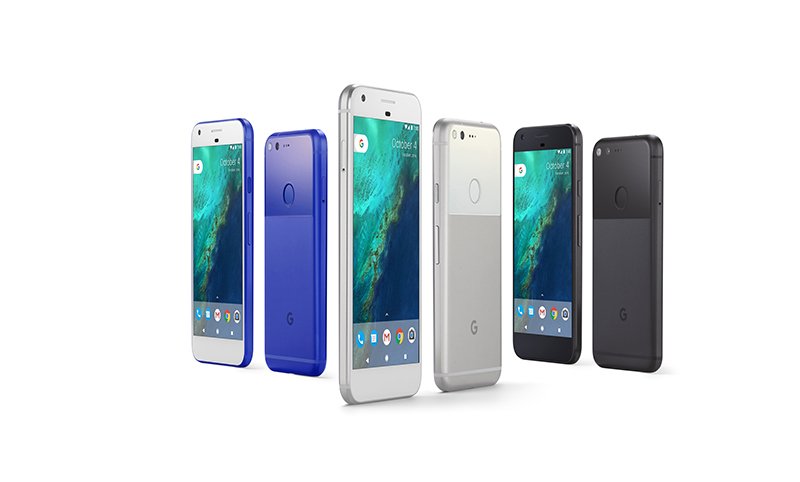
The Google Pixel and Pixel XL are powered by Qualcomm Snapdragon 821 processor, with two cores clocked at 1.6GHz, and two cores clocked at 2.15GHz. Both the Pixel and Pixel XL smartphones will pack 4GB of LPDDR4 RAM and sport Pixel imprint fingerprint sensor. They sport a 12.3-megapixel rear camera with a Sony IMX378 sensor, PDAF, a large f/2.0 aperture, and 1.55-micron pixels. Both sport an 8-megapixel front camera with a Sony IMX179 sensor, a f/2.4 aperture, and 1.4-micron pixels.
The Pixel phones will also include unlimited photo and video backup through Google Photos. It even saves them at full resolution including 4K. They will be available in 'Quite Silver' and 'Very Black' colours with a limited edition 'Really Blue' version only available in the US on Verizon network.
The Google Pixel and Pixel XL will be up for pre-orders in India starting from October 13, with a shipping date and retail availability confirmed as "end of October". The phones will be available from Flipkart, Reliance Digital, and Croma, as well as smaller retailers.
Daydream View VR
Google unveiled Daydream View, the first VR headset which will be compatible with the Daydream VR platform supported handsets. Currently, only Google Pixel and Pixel XL phones support Daydream VR platform, but more devices are expected to be added to this list. Along with the Daydream View VR headset, a companion controller was also released.
The other half of the headset is the Daydream controller, which was shown as a sketch back in Google I/O. The controller looks like the air remote we see on smart TVs, and it has a circular patch which is clickable on the top and in the centre there are two buttons – one Home and the other Menu button. There are volume buttons on the side and it houses sensors to detect motion. The controller can be slid inside the View’s flap when it is not in use.
The Daydream View VR headset will start selling in November at $79 (approx Rs 5300). The Daydream View will be up for pre-order in the US from 20 October and it will go on sale on Best Buy, Verizon and the Google Store in the US. It is also expected to launch in Canada, the UK, Germany, Australia in early November. India launch date is not known.
Google Assistant
Well, Google had started its event talking about Google Assistant, and honestly, it was the focal point of nearly every product. A lot of Assistant’s functionality is similar Google Now and Google Now On Tap.
You can search for events nearby, make reservations, send text messages, and play music, but Assistant makes it a more conversational experience. For example, you can search for a restaurant, then follow up that command by asking "How far away is it?" and Assistant will understand that "it" refers to the "restaurant".
Developers and the rest of the world will soon be able to make bots that interact with Google Assistant and new Google devices made public.
Google Home
Google first mentioned the Google Home at its I/O Event this year. Now, we have a launch date, November 4th, a price. It will cost $129, and you can pre-order it right now.
Just like the Echo and its companion AI Alexa, Google Home is a speaker with Google Assistant integration. It's a speaker that responds to voice commands, answers your queries, populates your shopping lists and more.
If you have a Chromecast, Google Home can control your TV. If you have Chromecast Audio, Google Home can control your speakers. If you have multiple Google Home devices, Google Home can play and sync music playback across all of them. If you have a compatible smart home setup, Google Home can control your house. The capabilities of Google Home know no bounds.
Google Wifi
Google WiFi is the router that was launched to enable multi-point mesh Wi-fi routing. Google WiFi router can work as a stand-alone router or work with multiple Google WiFi routers to create a sort of multi-point router network inside your home. The Google WiFi is built by improving on the Google OnHub router which Google had announced last year.
The Google WiFi router supports AC1200 speeds along with simultaneous dual-band 2.4GHz and 5GHz network support. It also uses Bluetooth connectivity for simpler set-up purpose and making the mesh network.
The Google WiFi also comes with a Network Assistant app which works in the background to ensure that you can easily add more routers to the network, have strong signals by optimising the network depending on your movements, and also letting you control the routers in different rooms. A companion app also lets you enable or disable router connections.
Coming in a one-pack configuration for $129 (approx Rs 8,600) and a three-pack variant for $299 (approx Rs 20,000), the Google WiFi will be available for pre-order in the US in November and start shipping in December. There is no idea when it will be released in India as there was no mention of international availability.
4K Chromecast Ultra
Chromecast has been a popular Google device since its first generation. With the latest Chromecast Ultra, Google has decided to go all out and enable 4K streaming. Chromecast Ultra will also support HDR and Dolby Vision.
Chromecast Ultra is around 1.8x faster than standard Chromecast, in terms of loading content due to improved Wi-Fi connectivity says Google. It also comes with an ethernet port which is integrated into the power adapter making is simple to connect to. You can mirror content from your phones or laptops and it is also expected to work with Google Home when it is released.
The Chromecast Ultra continues with its circular design, and it now has a magnetic back where the HDMI cable of the Ultra attaches itself when not in use. It comes with a piano black finish with a prominent G logo instead of the Chrome branding.
The wait is finally over for the users in India waiting for Google has introduced its Play Music service in India. Google has quietly opened its Play Music store in India, with songs and albums now available for purchase. The Play Music was rumored to launch back in July but it didn't happen back then. Its worth noting, the subscription service - known as Google Play Music All Access - is not yet available in the country.
The news comes after the Google for India's event on Tuesday where the company launched a bunch of apps and new features suited for the Indian users. However, there is no official announcement by Google India to add to the same on its blog. With the new Play Music service, Google will enter the digital music market in India to compete with the likes of Apple's iTunes and Airtel's Wynk Music.
Google Play Music doesn't let you stream music as of now, with no Google Play All Access subscription plan, no radio, and podcasts services in India. You can only buy songs and albums individually on the app. With no support for streaming, Google may fall behind Apple Music, Saavn, and Gaana that currently occupy the streaming market in India.
Detailing on the pricing, Google Play Music hosts individual songs of the genres like Bollywood, regional, Indian Pop, and International starting Rs. 15 per song, while an entire album costs within the Rs. 100 - Rs. 200 range. You can preview the tracks and pay for them as per your suitability using your debit/ credit card, or with Google Play cards.
The Web version of Play Music is also live with a support for Google Chrome extension for desktops in case users want a player app.
Interestingly, the Play Music app on iOS didn't let us successfully sign into the app, suggesting the service might roll out on iOS platform later.
Users can also upload music via Google Play Music on the web - users will be required to download the Music Manager app, which then allows you to upload files from your computer, or playlists via iTunes and the Windows Media player. Users will then be able to listen to the uploaded music anywhere once they sign into the Google Play Music service, whether on Android or the Web.
Google wants you to know that even though it has released text-messaging app Allo and video-calling app Duo, it has not forgotten Hangouts. This is why the search giant has released version 13.0 update for Hangouts, which brings support for Chrome Custom Tabs to the app on Android.
On the updated version of the app, you will find the option 'Browse in Hangouts' in the settings and by default it comes enabled. You also get the option to open the page in Chrome.
In the settings menu, at the top, there sits a warning to remind users that 'Conversation merging is no longer available', as pointed out by 9to5Google. Google removed 'merged conversations', which showed Hangouts messages and SMS messages from the same user in a single conversation, with its version 11.0 update of the Hangouts app on Android.
"Merged conversations used to let you see your Hangouts messages and text messages in the same conversation. We have decided to remove it, because it caused user confusion and had low usage," Google said regarding the removal of merged conversations.
Google has clarified that it wants Hangouts to be focused on businesses and simpler apps Allo and Duo to be consumer-centric.
The search giant recently announced that Hangouts On Air will move from Google+ to YouTube Live. In its note, the company said, "Events cannot be scheduled on Google+ after September 12 and you will need to move existing events scheduled to happen after September 12 to YouTube Live."
Ex- CIA employee and whistle-blower, Edward Snowden warned people about the lack of privacy on Google's recently launched messaging app Allo, and advised them not to use it.
Allo launched yesterday, as the first platform to be integrated with Google's new intelligent agent, Google Assistant. Google had announced at the I/O conference earlier this year that Allo would not be saving messages on its own servers, but that is not the case with the final application.
The reason for saving the communications in Google servers is apparently to improve Google Assistant, which is a win for machine learning, but a loss for privacy. However, upon request, Google can make the data available to law enforcement agencies. These concerns over security prompted Snowden to tweet out a warning against using the newly launched app.
He defined it as "A Google app that records every message you ever send and makes it available to police upon request." He further went ahead and suggested using apps such as Signal for communication purposes instead.
What is #Allo? A Google app that records every message you ever send and makes it available to police upon request. https://t.co/EdPRC0G7Py
The danger that Snowden is trying to point out here is that while Google may be officially claiming to log the chats to improve its own Artificial Intelligence offerings, the choice was made knowing that the private communications would be made available to law enforcement agencies upon request. Allo works as a surrogate mass surveillance system, because Google simply hands over user data when enforcement agencies request it.
Snowden had previously asked for the boycott of Allo in May. He said that the decision taken by Google to disable end-to-end encryption by default in Allo was 'dangerous' and added "Avoid it for now."
Google's decision to disable end-to-end encryption by default in its new #Allo chat app is dangerous, and makes it unsafe. Avoid it for now.
It is worth noting that the app still has an incognito mode, which allows end-to-end encryption on messages sent through the app. The messages sent through incognito are not stored by the company. There is also a timer that allows destruction of sent messages in as little as five seconds. A messaging client such as WhatsApp that by default does not save messages in its own servers is a more secure option, as there is no data saved to comply with requests by law enforcement agencies.
Google is preparing to launch its new flagship smartphones for 2016, and everyone is curious what the company would have in store for us after the highly appreciated Nexus 5X and Nexus 6P flagships of last year.
Rumors are strong about Google's upcoming Nexus devices, which have one edge over their rivals as they come packing the pure version of the Android OS. Sources familiar with the matter report that Google has probably re-branded the gadgets, taking away the traditional "Nexus" branding, but we might be looking at a new design change as well.
By looking at surfaced codenames for the handsets, we can guess that two more Google smartphones will be landing in 2016. The codenames, T50 and T55, can be hints to the screen sizes of the two devices. The first should therefore sport a 5-inch display, while the larger model is expected to bring a 5.5-inch screen framed by extremely thin bezels.
Multiple media outlets reported that Google pulled the plug on the "Nexus" moniker and instead chose to call its upcoming handsets "Pixel". Just as a reminder, the OEM previously used Pixel to name its proprietary tablet and Chromebooks. The 5-inch smartphone will be called Pixel, while the phablet will be dubbed Pixel XL.
Manufacturers
Google is not building the Pixel variants itself but has probably outsourced the manufacturing process to other companies, with Huawei claimed to be the main candidate considering the hit of last year.
However, MyDrivers claimed that HTC has signed a contract with Alphabet for these devices, an idea that is supported by Evan Blass, who claims HTC will indeed be making Google's next Nexus devices and that they are called M1 and S1. Android Police backs up the codenames in a separate report, claiming M1 refers to Marlin and S1 is Sailfish., but it is yet unclear if the devices will be manufactured by HTC or by Huawei or maybe by both.
Design
Design leaks started for the Nexus/Pixel handsets in the middle of 2016, but one of the earliest indicators was a concept render from Android Police(above), which was inspired by details from a reliable source.
This sees the Sailfish as a mostly metal device, but with a third of the rear offering a glass panel at the top. There's a deep chamfer at the edges, as you'll find on the HTC 10, suggesting that family link between the Nexus device and the manufacturer. The Pixel has now been fully rendered in 3D video, for your closer examination, by Android Authority.
For the other variant we know less. It's been claimed by one source that the Marlin, the larger of the two handsets, will be based on the HTC 10. A recent leak suggests we can expect speakers at the bottom of the device and a fingerprint sensor on the rear. This has been supported by a report from TechDroider also claiming a HTC 10-like design with a fingerprint sensor on the rear and no camera bump.
Specs
Both the Pixel and Pixel XL are reportedly packing the Snapdragon 820 processor, which is already deployed in a number of top-shelf smartphones. Other sources hint that Qualcomm's recently announced Snapdragon 821 processors will equip the upcoming Google smartphones.
LlabTooFeR tweeted that the new Pixel smartphones will holster 12-megapixel primary camera and 8-megapixel secondary cameras. Sources note that the Pixel XL could have a 2K screen, while the smaller Pixel will make use of a standard 1080p screen. While both models will pack 4GB of RAM and 32GB of default storage space, the Pixel XL is said to carry a mighty 3,450 mAh power source.
Those who are worried that Google will take away the headphone jack can rest assured. The Pixel phones will come with the 3.5 mm traditional headphone plug-in slot, so users can use their favorite headsets for years to come.
Speaking of connectivity, Google does make some steps toward the future by ditching the microUSB and relying on the USB type-C on its future Pixel handsets.
It is to be expected that Google will embed its latest operating system, Android 7.0 Nougat, in its future Pixel smartphones.
People close to the matter say that Google will make the official announcement of the Pixel handsets on Oct. 4, with the devices hitting the stores as early as Oct. 20.
US tech giant Google has released Version 2.0 of its Photos app for iOS that now gives users the ability to edit Live Photos and turn them into shareable GIFs and video clips, a media report said.
Live Photos is an interesting feature in Apple's iPhone 6s/6s Plus and in the soon to be released iPhone 7 models as well. Live Photos are easy to shoot by simply tapping on the circular icon on the camera setting that brings your photos to life by creating a moving image.
A Live Photo captures 1.5 seconds of video and audio both before and after you press the shutter button to take a photo. Thus, in addition to a still JPEG image, you also get a three second Live Photo.
"Google first introduced the ability to edit Live Photos earlier this year with the Motion Stills app," Techcrunch reported on Friday.
The Motion Stills app improves your Live Photos by helping you to do things like crop out the blurry frames, freeze the background, create cinematic pans, stabilise the images.
In addition, the upgraded app also lets you share video clips on YouTube. With the new and updated Photos app for iOS, users can finally share their Live Photos to other messaging apps apart from Apple's own iMessage platform.
However, with iOS 10 WhatsApp is expected to bring in direct GIF sharing that should make things easier for iOS users. We expect WhatsApp to help with sharing Live Photos as GIFs as well for iOS users.
The tech giant Google has acquired the rising API startup Apigee in a $625 million deal. Both companies reached an agreement this past Thursday, September 8. Diane Greene, Senior Vice President of Google's corporate branch, published a post with the announcement back on Thursday at the Google Cloud Platform Blog.
Most recently, the Alphabet subsidiary bought the cloud software company Bebop back in late 2015, the cloud video startup Anvato, and the enterprise-focused platform Orbitrera on August for $100 million.
The search giant Google has slowly but consistently been gaining presence in the corporate services industry with the announcements of various tools. The California-based company wants to compete with the likes of Amazon and Microsoft.
In an interview with Recode following the Apigee purchase, Greene stated she was excited about the integration of her division finally fitting into place at Google and the significance of their work with the tech giant.
"The addition of Apigee's API solutions to Google cloud will accelerate our customers' move to supporting their businesses with high-quality digital interactions. Apigee will make it much easier for the requisite APIs to be implemented and published with excellence," said Greene.
Apigee's customer base lists big names in various industries, including Walgreens, AT&T, Live Nation, First Data, Burberry, and Bechtel. The API management startup is responsible for developing the supporting structure for some of Walgreen's core services like prescription refills and photo printing.
Google intends to put Apigee in the front line of digital interaction solutions for businesses in the future. Meanwhile, Amazon Web Services and Microsoft continue to be the lead providers in the cloud enterprise services industry.
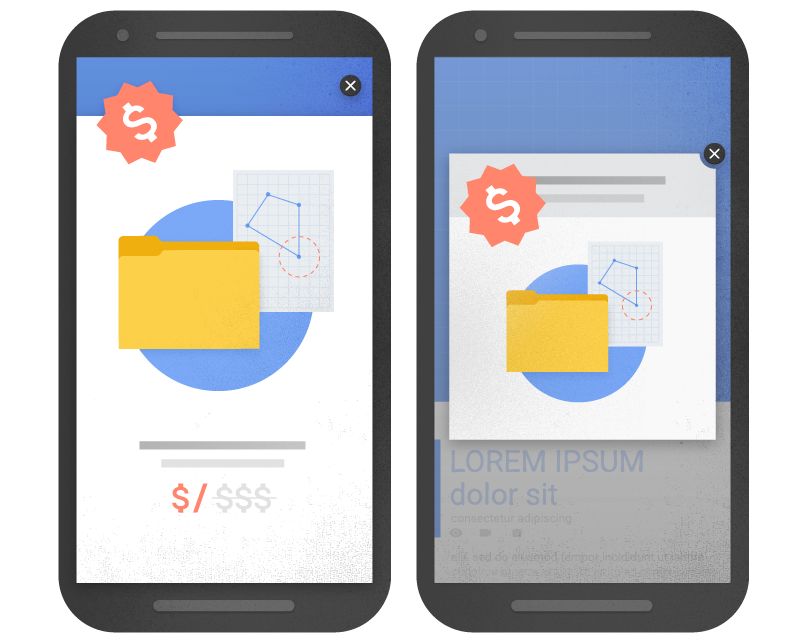
Google announced on Tuesday that starting January 10 next year, websites that allow intrusive interstitial advertisements that hinder immediate access to content, will start ranking lower in its mobile search results.
In its blog post to webmasters, Google said, "Pages that show intrusive interstitials provide a poorer experience to users than other pages where content is immediately accessible. This can be problematic on mobile devices where screens are often smaller."
As a result of this change, the ranking of those websites will be lowered if they contain advertisement popups that covers the main content, either immediately after the user navigates to a page from the search results, or while they are looking through the page. Google has also mentioned other scenarios where the unnecessary advertisements affect users' browsing over here.
However, the California-based company has pointed out that there are certain exceptions where the popups or messages are necessarily required by the websites and cannot be avoided. Such cases include interstitials that appear in response to legal obligations, such as for cookie usage or for age verification. Even if the advertisements use reasonable amount of screen space won't impact the website's ranking, Google said.
Moreover, Google also admitted that the websites where the content is not indexable and sits behind a paywall, login dialogues are necessarily required and can't be avoided.
Google also announced that it will be removing the mobile-friendly label from its search results as it has found that around 85 percent of the websites in its search results now meet the criteria since their introduction in 2014. The mobile friendly label was essentially given to a website that was optimised for mobile devices, for example, where the text and content was readable without zooming and the tap targets are appropriately spaced. It added that even though the label is being removed to make search results "uncluttered," the criteria will still continue to be a ranking signal.
In what can be considered as an interesting new development, Google is building a new operating system. The new OS is called Fuchsia, and is probably the first operating system built by Google that is not based on the Linux kernel.
While Google hasn't announced any official details about the Fuchsia operating system, the tech giant released the project on GitHub. The description is at its cryptic best, and reads Pink + Purple = Fuchsia (a new operating system).
After Android Police's investigation of the extensive documentation, it found out that the new OS was largely built to favor IoT and embedded hardware. The rapid increase of products in this space has evidently led Google to build a lightweight OS that was more compatible with modern IoT hardware. However, Fuchsia also appears to be designed so that it can scale to support smartphones and desktop computers as well.
Firstly, Fuchsia uses a new Magenta kernel that is specifically designed to compete with other embedded hardware operating systems like FreeRTOS, and ThreadX. Google has used Dart as the main programming language, and has introduced support for Flutter hinting that it will use Material Design as the UI. The new OS is meant to be open source as well, with full details yet to be finalized.
Google could be building Fuchsia as a separate OS only for its IoT devices, and probably isn't looking to replace its Linux-based Android and Chrome OS software at all. It is building IoT devices like OnHub and Google Home, and is probably looking to build a lightweight OS to pair seamlessly with these devices. Alternatively, Google could just be testing this operating system, and it could just shelve the project before release. As there is no clarity from Google yet, all of this is mere speculation and should be taken as such.