Showing posts with label Internet. Show all posts
Monday, January 23, 2017
How To Create Whatsapp Group Invitation Link
Title: How To Create Whatsapp Group Invitation Link
Author: Archit Ahuja
Published: January 24, 2017 at 01:47AM
Source: Safe Tricks
Read More: Click Here
How to Come up With More Than Enough (Great) Ideas for Your Blog
Title: How to Come up With More Than Enough (Great) Ideas for Your Blog
Author: Ali Luke
Published: January 23, 2017 at 06:30PM
Source: ProBlogger
Read More: Click Here
Labels:
and Tutorials,
Computers,
FAQs,
Help,
Internet,
On the Web,
ProBlogger,
Weblogs
PB177: How to Build Traffic and Momentum on Your Blog After a Blogging Slump
Title: PB177: How to Build Traffic and Momentum on Your Blog After a Blogging Slump
Author:
Published: January 23, 2017 at 01:30PM
Source: ProBlogger
Read More: Click Here
Labels:
and Tutorials,
Computers,
FAQs,
Help,
Internet,
On the Web,
ProBlogger,
Weblogs
Monday, December 12, 2016
New Ransomware Offers Free Decryption Key to Victims if They Infect Others
Ransomware threats are getting more difficult and twisted in recent times. Over the past few months, malware-related attacks have been carried out around the world at an alarming scale. The most recent case allegedly involves a Syrian group that wants more than just a ransom.
A ransomware named "Popcorn Time" encrypts your Windows files with an AES-256 encryption. To unlock the files, the victim will need to pay one Bitcoin ($780 or roughly Rs. 52,600). However, the malware offers an alternative way to unlock the files as well.
The victim is also given the choice to infect two more people via a referral link. If they get infected and pay the ransom, then the original victim will receive a free decryption key to unlock the files. It is additionally found that entering the decryption code more than a few times can permanently lock the files.
The ransomware encrypts files in Documents, Pictures, Music, and Desktop folders as well as a number of file extensions after a recent update. The ransomware is reportedly still in development and certain details may change based on the updates.
Next ransomware on the table: Popcorn Time.— MalwareHunterTeam (@malwrhunterteam) December 7, 2016
Not yet finished.
4th screenshot, "Why we do that?" part. Okay...@BleepinComputer @demonslay335 pic.twitter.com/JHbOjJt7Gb
Ransomware such as "Popcorn Time" have been a common sight and traditionally victims had no way out other than paying up. However, offering a free decryption key by infecting others is something quite new, and serves the group's purpose of widely spreading the ransomware.
The ransomware, spotted by the MalwareHunterTeam, was reportedly made by a group of computer science students from Syria, who claim the ransom will be used as food and shelter in Syria.
"We are extremely sorry that we are forcing you to pay but that's the only way that we can keep living," said the ransomware note.
Source: BleepingComputer
Follow Me on Twitter>>>> @iamBhavish
And like us on Facebook>>> The Gud1
Monday, November 21, 2016
How to Choose a Good VPN?
Virtual Private Networks (VPNs) have been around since the late 1990s. They were created to help businesses share confidential information securely. Today, VPNs are a multi-purpose digital survival tool, and are offered by numerous companies for private and corporate use.
Given the vast range of VPN offerings, you might be wondering: How do I choose a quality VPN?
Here are four things to look for in a good VPN provider.
1. Numerous locations and unlimited server switches
That said, it’s important to choose a VPN provider that has a wide range of server locations around the world. For example, if your media diet includes a healthy dose of Netflix, BBC iPlayer, and Rai TV, you’ll want a VPN provider that has servers in the U.S., UK, and Italy.
What’s more, you should expect your VPN provider to offer unlimited server switches. Some companies have servers all over the world, but limit the number of server switches allowed per day or month. The result? You could still be seeing those pesky “content is not available in your location” screens when you run out of server switches.
Morale of the story: Find a VPN service that not only covers the globe, but also gives you the flexibility to hop around it.
2. Long encryption keys and open standards
Unlimited server switches across dozens of countries may be great, but it means nothing if your VPN provider can’t keep you safe and anonymous online. A great measure of a VPN’s security capability is its encryption strength. Nowadays, the industry standard is 256-bit encryption, so named because it uses 256-bit keys.
With a key that is 2256 digits long, even if someone could use all the supercomputers in the world for a billion years to guess the key through brute-force hacking, they still wouldn’t crack the actual combination. Certificates, used to establish the authenticity of the connection, should be as long as 2048 or 4096 bit.
Furthermore, check that the provider offers leading VPN protocols like OpenVPN and IKEv2. OpenVPN is the current gold standard and offers the best combination of performance and security.
Don’t get tricked by VPN providers who simply claim to offer “military-grade encryption.” If they don’t provide 256-bit encryption or don’t use OpenVPN, move on.
3. No logs
The solution? Look for a VPN provider that does not keep logs on you. In particular, make sure they won’t log your:
- Browsing history
- Traffic data
- DNS queries
While virtually all VPN companies collect some user data (e.g. connection date and server location used) for maintenance purposes, you should make sure the information they collect cannot be used to identify you.
Also, check that the VPN provider runs their own DNS service—you don’t want your online requests to end up on someone else’s records. And if the VPN provider accepts Bitcoin payments, it’s another sign that they respect your anonymity.
4. VPN kill switch and split tunneling
Even if a VPN checks all of the boxes above, it could still suffer from an occasional dropped connection.In the event that happens, make sure your VPN provider has a kill switch that cuts off internet traffic when the VPN connection fails. A VPN kill switch ensures no internet traffic can leave your device without encryption and is a necessary feature of any decent VPN.
For those looking for the whole package, check that your VPN has split tunneling.
Split tunneling lets you “split” your device traffic, sending some of it through the VPN and letting the rest access your local network. By using a VPN with split tunneling, you can secure all your internet traffic while retaining access to local network devices like your network printer.
Labels:
DNS,
ExpressVPN,
Featured,
Guest Post,
How To,
Internet,
Internet Privacy,
PC Privacy,
Privacy,
Tech,
VPN
Wednesday, August 24, 2016
Google to Start Ranking Websites With Popup Ads Lower in Mobile Search Results
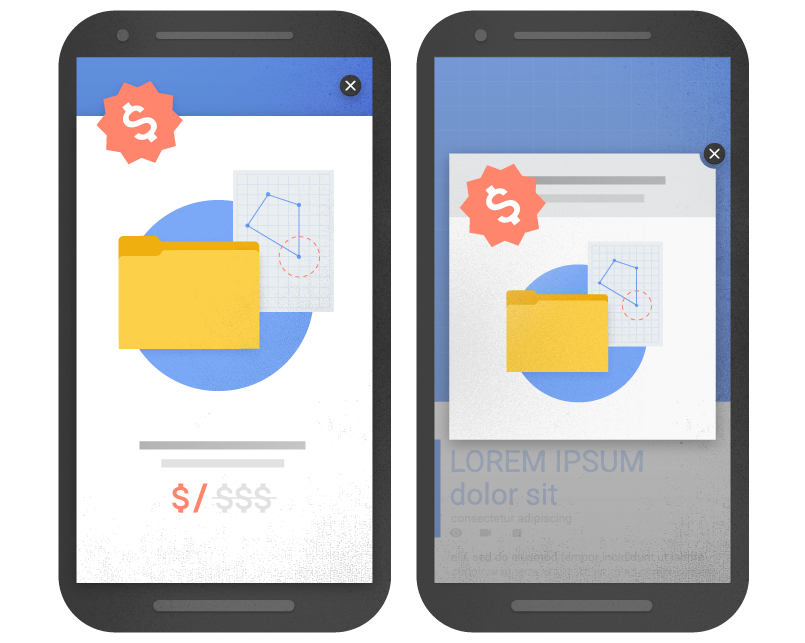
Google announced on Tuesday that starting January 10 next year, websites that allow intrusive interstitial advertisements that hinder immediate access to content, will start ranking lower in its mobile search results.
In its blog post to webmasters, Google said, "Pages that show intrusive interstitials provide a poorer experience to users than other pages where content is immediately accessible. This can be problematic on mobile devices where screens are often smaller."
As a result of this change, the ranking of those websites will be lowered if they contain advertisement popups that covers the main content, either immediately after the user navigates to a page from the search results, or while they are looking through the page. Google has also mentioned other scenarios where the unnecessary advertisements affect users' browsing over here.
However, the California-based company has pointed out that there are certain exceptions where the popups or messages are necessarily required by the websites and cannot be avoided. Such cases include interstitials that appear in response to legal obligations, such as for cookie usage or for age verification. Even if the advertisements use reasonable amount of screen space won't impact the website's ranking, Google said.
Moreover, Google also admitted that the websites where the content is not indexable and sits behind a paywall, login dialogues are necessarily required and can't be avoided.
Google also announced that it will be removing the mobile-friendly label from its search results as it has found that around 85 percent of the websites in its search results now meet the criteria since their introduction in 2014. The mobile friendly label was essentially given to a website that was optimised for mobile devices, for example, where the text and content was readable without zooming and the tap targets are appropriately spaced. It added that even though the label is being removed to make search results "uncluttered," the criteria will still continue to be a ranking signal.
Recent Video:
Do Subscribe on YouTube!
Follow Me on Twitter>>> @iamBhavish
And like us on Facebook>>> The Gud1
Wednesday, May 7, 2014
The internet will have almost 3 billion users by the end of the year, UN report says
11
inShare
The internet will have nearly 3 billion users, about 40 percent of the world's population, by the end of 2014, according to a new report from the United Nations International Telecommunications Union. Two-thirds of those users will be in developing countries.
Those numbers refer to people who have used the internet in the last three months, not just those who have access to it.
Internet penetration is reaching saturation in developed countries, while it's growing rapidly in developing countries. Three out of four people in Europe will be using the internet by the end of the year, compared to two out of three in the Americas and one in three in Asia and the Pacific. In Africa, nearly one in five people will be online by the end of the year.
Nearly 20 percent of Africa will be online by the end of the year
Mobile phone subscriptions will reach almost 7 billion. That growth rate is slowing, suggesting that the number will plateau soon. Mobile internet subscriptions are still growing rapidly, however, and are expected to reach 2.3 billion by the end of 2014.
These numbers make it easy to imagine a future in which every human on Earth is using the internet. The number of people online will still be dwarfed by the number of things, however. Cisco estimates the internet already has 10 billion connected devices and is expected to hit 50 billion by 2020
Subscribe to:
Posts (Atom)