Showing posts with label Narendra Modi. Show all posts

Friday, December 30, 2016

BHIM App Launched; Here's some FAQs


Indian PM Narendra Modi on Friday launched a United Payments Interface (UPI) based app called BHIM, short for Bharat Interface for Money. The BHIM app is a UPI app, which would allow anyone to make simple digital payments directly from their bank account. The UPI-based app allows anyone to pay or receive money through online banking, unlike a wallet where you have to first load the money before you can use it.

"Be it a smartphone or feature phone of Rs 1,000-1,200, BHIM app can be used. There is no need to have Internet connectivity, one only needs a thumb. There was a time when an illiterate was called 'angutha chchap'. Now, time has changed. Your thumb is your bank now. It has become your identity now," says PM Modi.

What is BHIM app?

With the BHIM app, anyone can send or request money through the app to make a digital payment. The app is linked to your bank account, so you don't have to load money like a wallet in it, and the also merchant does not have to worry about transferring the money back to their bank account. Download the BHIM app by the National Payments Corporation of India (NPCI) on Google Play to start using the free Android app. The app will soon come to the iOS platform.

How do I use it?

After you download the BHIM app, you'll have to register your bank account through the app, and set a UPI PIN. Your mobile number is your payment address, and you can start transacting. Through the app, you can send or receive money to a phone number, check balance, or scan a QR code to make a payment without sharing a phone number.

Money can also be sent to non-UPI banks through IFSC, like you do with normal net banking.


Will it work on feature phones?

Apart from an app, the interface can be accessed using USSD (Unstructured Supplementary Service Data) from feature phones - you will need to dial *99# to access it. With this method, an Internet connection will not be required.

Which banks support this?

All the major banks are supported by the BHIM app as long as the bank supports UPI, you will be able to access your money through the BHIM app.

The list of supported banks is:
  • Allahabad Bank
  • Andhra Bank
  • Axis Bank
  • Bank of Baroda
  • Bank of India
  • Bank of Maharashtra
  • Canara Bank
  • Catholic Syrian Bank
  • Central Bank of India
  • DCB Bank
  • Dena Bank
  • Federal Bank
  • HDFC Bank
  • ICICI Bank
  • IDBI Bank
  • IDFC Bank
  • Indian Bank
  • Indian Overseas Bank
  • IndusInd Bank
  • Karnataka Bank
  • Karur Vysya Bank
  • Kotak Mahindra Bank
  • Oriental Bank of Commerce
  • Punjab National Bank
  • RBL Bank
  • South Indian Bank
  • Standard Chartered Bank
  • State Bank of India
  • Syndicate Bank
  • Union Bank of India
  • United Bank of India
  • Vijaya Bank.

Are there transaction limits?

Yes, there is a maximum of Rs. 10,000 per transaction permitted, and Rs. 20,000 within 24 hours.

The government has also introduced Aadhaar Payment app for merchants, which allows you to pay using your Aadhaar card and fingerprint.
Follow Me on Twitter>>>> @iamBhavish
And like us on Facebook>>> The Gud1

Sunday, July 17, 2016

Indian Government launches free online skill development courses


The Ministry of Skill Development and Entrepreneurship (MSDE) has announced the launch of an online platform – www.indiaskillsonline.com – for inculcating skills of choice and bridge the digital divide in India.

Courses on soft skill, languages, culture, digital literacy and entrepreneurship are some of the options that will be made available to the users.

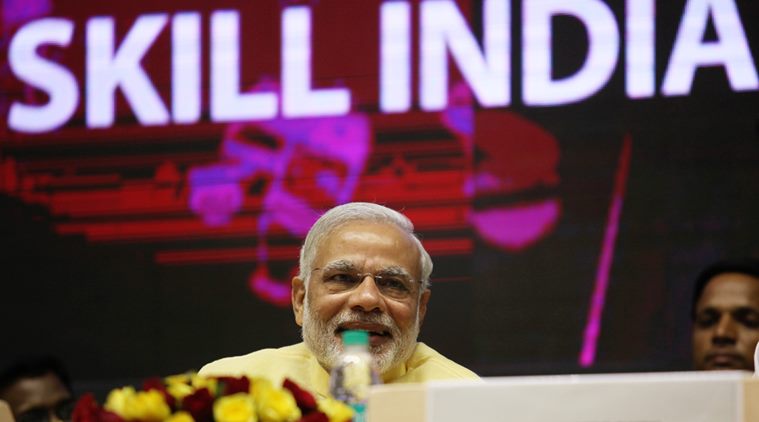
Prime Minister Narendra Modi had launched the Skill India mission last year which aimed to train over 40 crore youths in India by 2022.


"With the introduction of online skill learning, the whole nation potentially becomes a classroom. The audio-video graphical illustrations format will help internalise the concepts for the skill-seekers, faster and longer," the official statement said.

"Skill India resolves to bridge the digital divide by providing basic digital literacy opportunities to all skill-seekers. It will make them more aware, and better suited for the work environment of the day," it added.


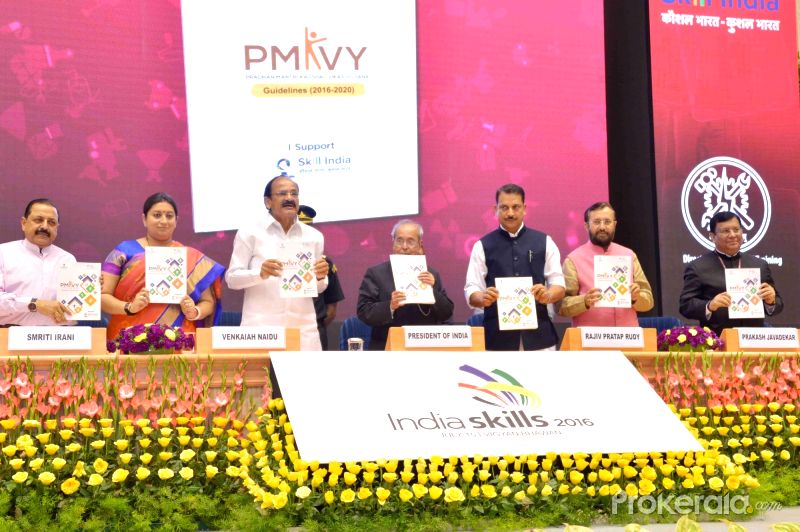
On Friday, President Pranab Mukherjee had inaugurated the first edition of ‘India Skills’ competition on the occasion of World Youth Skills Day.


Do Subscribe on YouTube!
Follow Me on Twitter>>> @iamBhavish
And like us on Facebook>>> The Gud1

Saturday, May 17, 2014

India's Modi gets hero's welcome as he brings new era to New Delhi

Hindu nationalist Narendra Modi (L), the prime ministerial candidate for India's Bharatiya Janata Party (BJP), gestures to his supporters during a road show in New Delhi May 17, 2014.


(Reuters) - Hundreds of Indians thronged the leafy streets of New Delhi on Saturday to greet Narendra Modi's triumphant march into the capital after he decimated the Nehru-Gandhi dynasty and the ruling Congress party in the biggest election victory the country has seen in 30 years.
Modi leaned far out of his car, waving a victory sign to jubilant supporters, in a drive from the airport to the headquarters of his Bharatiya Janata Party (BJP) in the center of town.
A Hindu nationalist who critics fear will be divisive and autocratic, Modi toned down religious issues in his pitch to India's 815 million voters and won the world's biggest ever election with promises of economic development for all.
The three-times chief minister of the western state of Gujarat is an outsider to Delhi's power circle. The low-caste son of a tea stall-owner, his rise to power signals the end of an era dominated by the descendants of India's first prime minister, independence hero Jawaharlal Nehru.
"Four to five generations have been wasted since 1952, this victory has been achieved after that," Modi said, in a jibe at the Nehru-Gandhi family and the Congress it dominates.
Describing himself as a "worker", he hailed grass-roots campaigners who showered him with pink rose petals as he arrived at party headquarters. There he met other party leaders and was expected to start discussions about forming a cabinet. Modi will not formally take office until after Tuesday, the party said.
Modi has given India its first parliamentary majority after 25 years of coalition governments, with his party winning more than six times the seats garnered by Congress.
With almost all 543 seats declared by Saturday morning, Modi's BJP looked set to win 282 seats, 10 more than the majority required to rule. With its allied parties, it was heading for a comfortable tally of around 337 - the clearest result since the 1984 assassination of prime minister Indira Gandhi propelled her son Rajiv to office.
During the campaign Modi was explicit about wanting to end the dominance of the Nehru-Gandhi family on Indian politics. He may have achieved the goal, with Congress reduced to just 44 seats, less than half of its previous worst showing.
Modi's landslide win gives him ample room to advance reforms started 23 years ago by current Prime Minister Manmohan Singh but which have stalled in recent years.
Despite his party's pasting, 81-year-old Singh was magnanimous in his final address to the nation on Saturday, wishing the incoming government success. Later, he tendered his resignation.
"I am confident about the future of India," he said in his televised message. "I firmly believe that the emergence of India as a major powerhouse of the evolving global economy is an idea whose time has come."
Unlike Singh and his predecessors, Modi will not have to deal with unruly partners to implement reform. That could usher in profound economic changes, with some supporters imagining him as India's answer to former British leader Margaret Thatcher.
U.S. REACHES OUT
The desire for change among the youthful electorate after a slump in economic growth, years of policy drift and a spate of corruption scandals overrode concerns about a spasm of violence against Muslims that occurred on his watch in Gujarat 12 years ago, as well as worries his pro-Hindu leanings would sideline minorities.
In his victory speech on Friday, 63-year-old Modi struck an inclusive tone, declaring that "the age of divisive politics has ended - from today onwards the politics of uniting people will begin".
"No words will be enough to salute the youth of India. They led from the front in the elections & rose above non-issues like caste & creed," Modi wrote on his Twitter page late on Friday.
In Washington, the Obama administration congratulated Modi, and said he would be granted a visa for U.S. travel. Washington denied Modi a visa in 2005 over the sectarian riots three years previously in Gujarat state, where he was chief minister.
Modi is expected to try to replicate his success in attracting investment and building infrastructure in Gujarat, the state he has governed for more than 12 years.
Betting on a Modi win, foreign investors have poured more than $16 billion into Indian stocks and bonds in the past six months and now hold over 22 percent of Mumbai-listed equities - a stake estimated by Morgan Stanley at almost $280 billion.
But with India's economy suffering its worst slowdown since the 1980s and battling high inflation, it will not be an easy task to meet the hopes of millions of Indians who have bought into the idea that Modi will quickly push their country onto the top table of global economic powers.
His party also lacks strength in the upper house of parliament, where backing is needed for legislation to pass.
When Indira Gandhi was prime minister it was often said that she was so dominant that "India is Indira, Indira is India". The Economic Times echoed that on Saturday, with a headline: "India is Modi. Modi is India."
"Modi's ability to rise from nothing to everything has demonstrated that Indians are no longer willing to accept credentials such as belonging to a dynasty or assertion of past scholarly accomplishment abroad as a substitute for persuasive argumentation: you have to perform to command respect," Jagdish Bhagwati, an eminent Indian-born economist who has positioned himself to advise the new prime minister, told Reuters in an email exchange.
(Additional reporting by Frank Jack Daniel and Aditya Kalra in New Delhi; Writing by Frank Jack Daniel; Editing by Raju Gopalakrishnan)

Friday, May 16, 2014

Modi wins India's election with a landslide, partial results show

Hindu nationalist Narendra Modi, prime ministerial candidate for India's main opposition Bharatiya Janata Party (BJP) and Gujarat's chief minister, attends the Confederation of All India Traders (CAIT) national convention in New Delhi February 27, 2014.


(Reuters) - Opposition candidate Narendra Modi will be the next prime minister of India, with counting trends showing the pro-business Hindu nationalist and his party headed for the most resounding election victory the country has seen in thirty years.
Modi's landslide win was welcomed with a thundering rally on India's stock markets and raucous celebrations at offices across the country of his Bharatiya Janata Party (BJP), where supporters danced, exploded fireworks and handed out sweets.
Prime Minister Manmohan Singh, whose Congress party headed for a crushing defeat, telephoned Modi to congratulate him on his success, the prime minister's office said.
Crowds surged around Modi's car after he visited his mother's home in the western state of Gujarat. He sent a message saying "India has won," that instantly set a record as the country's most retweeted Twitter post.
"I'm so happy because all of India wanted a strong government," said software engineer Vinod Rai as he embraced friends and shouted in joy at the BJP's Delhi headquarters, his forehead smeered with vermillion red.
The party was headed for a majority in parliament, giving Modi the most decisive mandate for any leader since the 1984 assassination of prime minister Indira Gandhi propelled her son to office. Since 1989, India has been governed by coalitions.
The BJP was winning in 277 seats of the 543-seat parliament, counting trends showed. An alliance led by the party was ahead in 336 seats, TV channel NDTV said.
Responding to the news Indian markets got off to a roaring start, with the rupee breaking below 59 to the U.S. dollar, an 11-month high, and the benchmark stock index jumped 6 percent before paring its gains.
Betting on a Modi win, foreign investors have poured more than $16 billion into Indian stocks and bonds in the past six months and now hold over 22 percent of Mumbai-listed equities - a stake estimated by Morgan Stanley at almost $280 billion.
Unlike his predecessors, Modi will not have to deal with unruly partners as he implements reform. That could usher in profound economic changes, and he will try to replicate his success in attracting investment and building infrastructure in Gujarat, the state he has governed for 12 years.
"He can afford to have a smaller but stronger cabinet, that means a far more decisive government. He has been saying less government and more governance, we are really likely to see that," said Navneet Munot, Chief Investment Officer at SBI Funds management in Mumbai.
But with India's economy suffering its worst slowdown since the 1980s and battling high inflation, it will not be an easy task to meet the hopes of millions of Indians who have bought into the idea that Modi will quickly push their country onto the top table of global economic powers.
"People will not give him much time to deliver," said Neerja Chowdhury, a political analyst and a former political editor of the Indian Express newspaper. "On the economic reform agenda, I think he will move very quickly ... he's a doer and he's very focused."
DESIRE FOR CHANGE
The 63-year-old's promises of job creation and clean, efficient government resonated with many of the half a billion people who braved blistering summer heat to vote in the world's biggest election over the last five weeks.
Since being named as his party's candidate last September, Modi has flown 300,000 km and addressed 457 rallies in a slick, presidential-style campaign that has broken the mould of Indian politics.
Modi's media-savvy, modern campaign ran circles round his slow-footed rival, Rahul Gandhi, 43, from the Congress party. The Congress, which led India to independence from Britain, was headed for its worst-ever result after two terms in office marred by corruption and a floundering economy.
Prime Minister Singh, who as finance minister launched reforms in 1991 that brought an end to decades of economic isolation, has already bid farewell to his staff after ten years in office marked by mounting policy paralysis.
The desire for change has been so strong that voters put aside concerns about Modi's Hindu-centric politics. A dark chapter of violence against Muslims on his watch has mattered less and less to many, including a bulging middle class alarmed by dwindling purchasing power and job opportunities as the economy slumped to sub-five percent growth in the last two years.
Gandhi was leading by a slender margin in his seat of Amethi, a family bastion that has been held in turn by his uncle, father and mother, Sonia. A loss there would spell disaster for the great grandson of India's independence leader.
Modi has promised that, if elected, he would take decisive action to unblock stalled investments in power, road and rail projects to revive economic growth.
Tax and labor market reforms, backed by a gradual opening up to foreign investment, would seek to create the 10 million jobs that Asia's third-largest economy must create every year to employ young people entering the workforce.
Modi watched the results on TV at his home in Gujarat then met his mother, 95-year-old Hiraben, at his brother's modest government flat in the state capital, Gandhinagar. He touched her feet and she put a red stripe on his forehead as a blessing, while crackers burst outside amid chants of "Modi, Modi."
He was later expected to embark on a victory tour to his local constituency of Vadodara, while party workers in New Delhi hoped he would go there later for what could be a hero's welcome.
(Additional reporting by Frank Jack Daniel, Rajesh Kumar Singh, Aditya Kalra, Rajesh Kumar Singh, Malini Menon and Tommy Wilkes in NEW DELHI, and by Sanjeev Miglani in AHMEDABAD, India; Writing by Douglas Busvine and Frank Jack Daniel; Editing by John Chalmers and Simon Cameron-Moore)