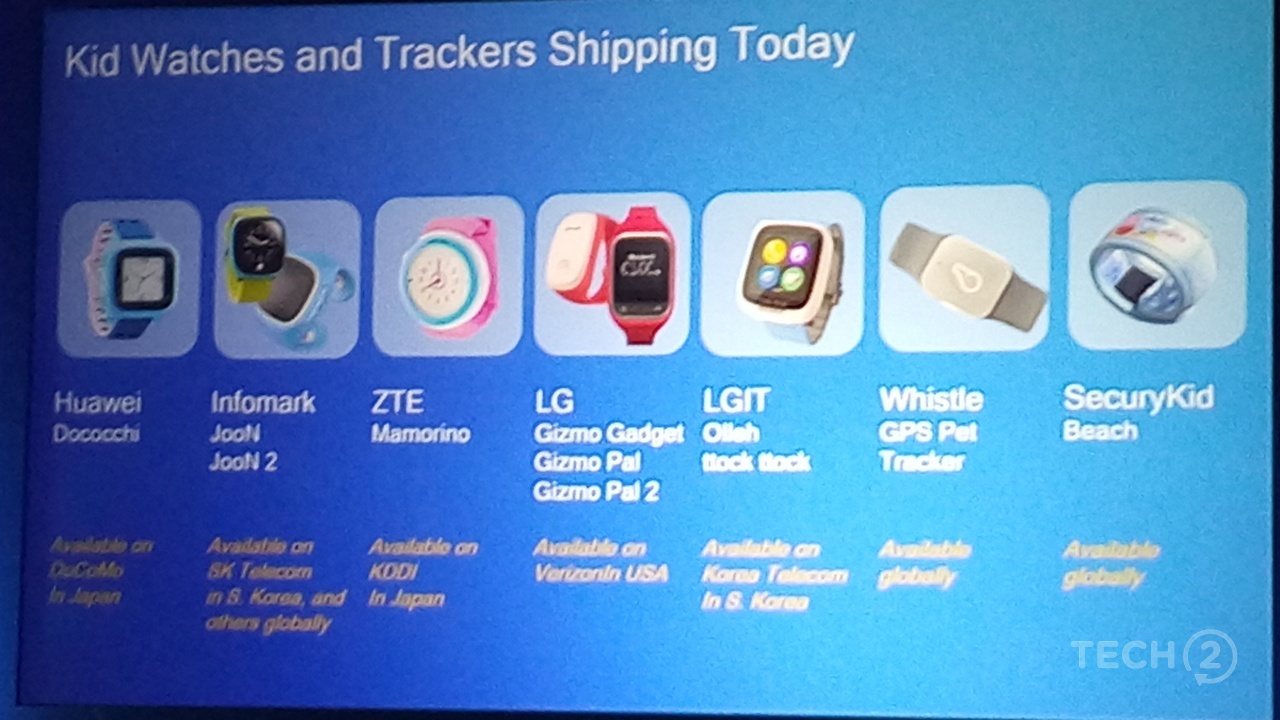
Qualcomm has announced its latest processor for its Snapdragon Wear platform called the Snapdragon Wear 1100. Unlike the Snapdragon Wear 2100 that was shown off in February, which is meant for multi-purpose devices such as smartwatches, the Snapdragon Wear 1100 is targeted at performing specific functions.
Unlike the Wear 2100 SoC, the Wear 1100 SoC is more focused on simpler devices like fitness trackers. Apart from LTE, it also comes with support for WiFi and Bluetooth. Qualcomm has partnered with several companies like Aricent, Borqs, Infomark, and SurfaceInk providing reference software platforms in order to bring this new tech into the market.
The Snapdragon Wear 1100 SoC also brings slow power mode called Power Save Mode (PSM), a much needed in smartwatches today. Companies like Anda Technologies, inWatch and WeBandz announced plans to bring wearable products targeted for kids and elders using the Qualcomm chipsets alongside the reference platforms available.
Speaking at the keynote, Senior Director and Business Lead of Smart Wearables at Qualcomm, Pankaj Kedia spoke about the bright future of wearables and internet of things (IoT) in general. "We are truly excited about the wearable space by customer category, by OS, by product category," he said. Kedia concentrated on five key factors for the Snapdragon Wear 1100 platform. Small size, low power, smart sensing, always-on connectivity week long LTE standby, hardware based security and next-gen GPS. Snapdragon Wear 1100 is targeted to unleash the Kids smartwatch segment, he said.
The Snapdragon 1100 SoC joins the already existing Qualcomm portfolio available for wearables. Qualcomm has already introduced Snapdragon Wear 2100, CSR102x Bluetooth Smart 4.2 SoC, and Qualcomm SiRFStar location into the wearable market. The company claims that more than 100 wearable products are now available with processors from Qualcomm.
Qualcomm processors are synonymous with flagship smartphone with almost all OEMs across the globe. The IDC reports that wearable shipments increased by 171 percent last year. It grew from 28.8 million to 78.1 million units last year, and Qualcomm understandably wants to make the most of this acceleration.
The Snapdragon Wear 1100 measures 79 square mm, houses an ARM Cortex A7 processor, has a Cat 1 modem, supports Linux and RTOS and supports hardware level security. The chipset will start shipping on 31 May.
Apart from Qualcomm, Asus also unveiled a host of products at Computex. The company took the wraps off the Zenfone 3 (three variants), Zenbook 3, and the Asus Zenbo Household Robot with voice control.
If you know me well, you may have an idea that I've always been an ASUS fanboy! So the Zenvolution was very important to me. Though I wasn't at the Humble House Taipei, for the launch I watched the whole event live! So go and follow me on Twitter as i live tweeted the whole event! So let's get started.
ASUS at its Zenvolution event on Monday, unveiled the Zenbook 3, 2 Transformer 2-in-1s, 3 variants of its Zenfone series and a home robot, Zenbo. Here is all the details on the products announced at Computex Taipei by ASUS.
Zenbook 3
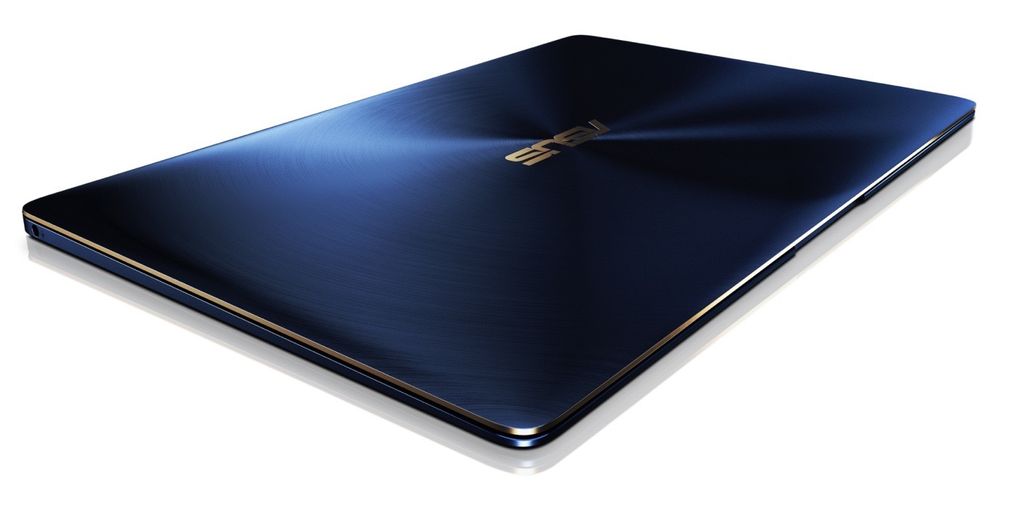
Asus isn't shying away on its battle with Apple. It has announced its new ultra portable ZenBook 3, an 11.9-millimeter device ASUS chairman Jonney Shih described as the "the world's most prestigious laptop." ASUS at the Zenvolution was comparing it directly to MacBooks, promising an aluminum alloy device that weighed less than Apple's lightest laptops, and a processor "two times faster than MacBook."
The ZenBook 3 will also feature the company's highest screen-to-body ratio of any of its laptops — 82 percent. That screen is 12.5 inches, and is coated in gorilla glass. The body of the laptop has a full-size keyboard, a glass-covered touchpad, and a fingerprint reader that supports Windows Hello to make logging in possible without needing to type in your password.
"Something thinner that the MacBook and more powerful than it" available starting at $999 USD #Zenbook3#Zenvolution
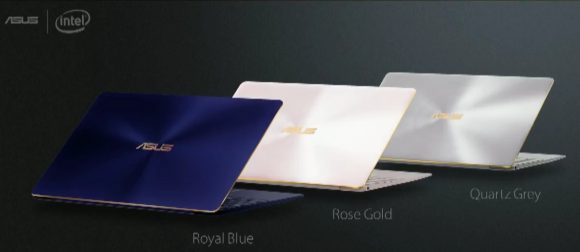
The laptop will come in three Royal Blue, Quartz Grey, and something to compare with Apple, Rose Gold. A ZenBook 3 with an i7 processor and a 1TB solid state drive will be available for $1,999, or $1,499 with a 512GB SSD.
Transformer 3 Pro & Transformer 3
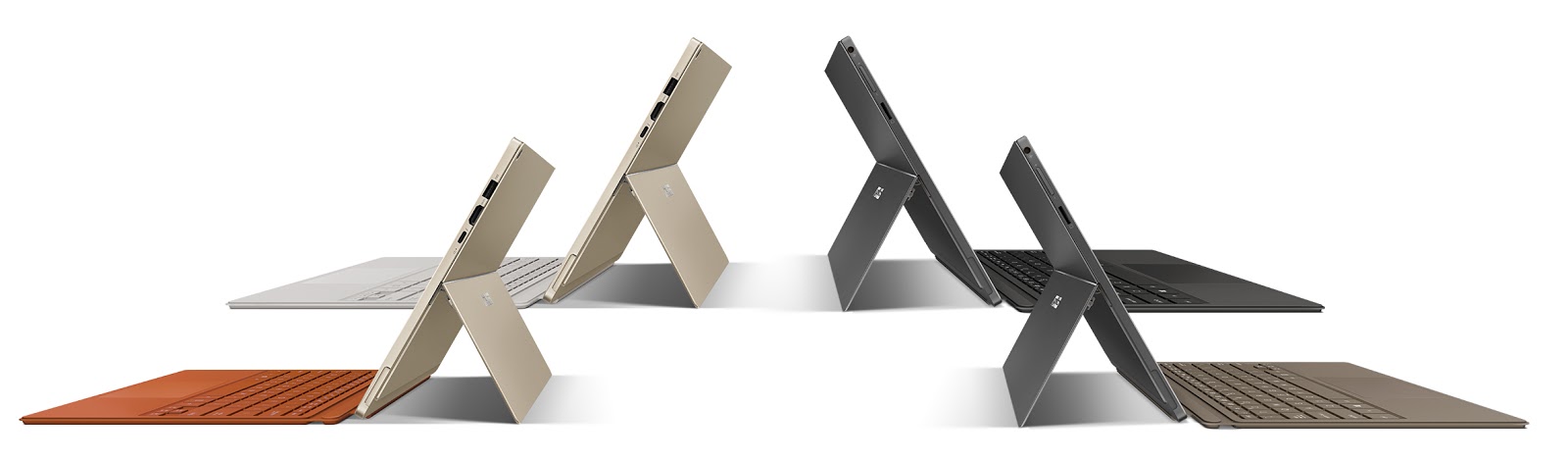
After Macbook, ASUS is setting its sights on the Surface Pro 4 with its latest Transformers 2-in-1s. The Transformer 3 Pro and Transformer 3 feature 12.6-inch displays with a resolution of 2880 x 1920 resolution with a pixel density of 275 ppi, and come with an integrated kickstand as well as portable keyboards.
Both 2-in-1s offer USB Type-C and Thunderbolt 3 connectors, as well as a full-size backlit keyboard with 1.4mm travel, a glass trackpad and fingerprint sensors. As you'd expect, the Transformer 3 Pro is the high-end offering, with a Core i7 CPU, up to 1TB PCIe SSD, 16GB of RAM, and 13MP cameras at the front and rear.
The Transformer 3 Pro will start from $999, while the Transformer 3 with 256GB SSD and keyboard cover will be available starting $799. You'll be able to pick up the 2-in-1s in grey or gold.
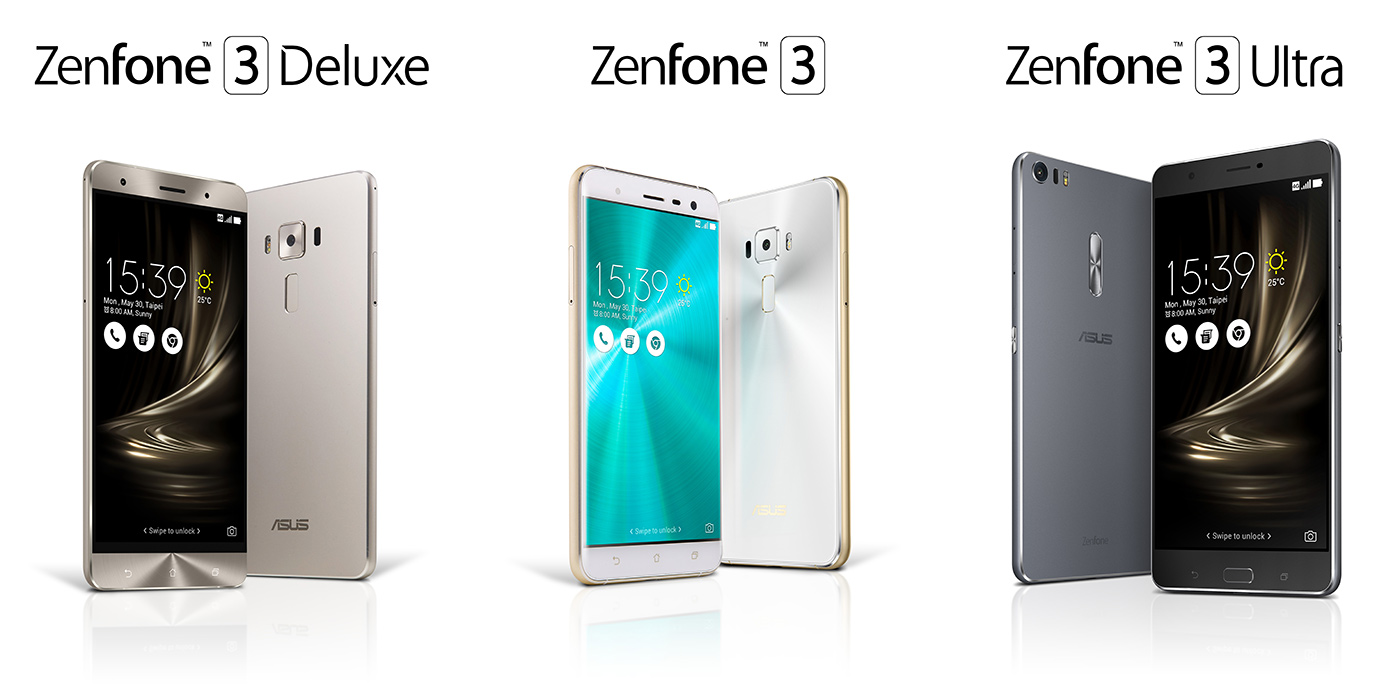
ASUS also unveiled its new ZenFone 3 series with three variants: ZenFone 3, ZenFone 3 Deluxe, and ZenFone 3 Ultra - varying in different sizes and specifications.
The regular Zenfone 3 is positioned as a mainstream phone with strong design at a low price; the Zenfone 3 Deluxe goes for high-end performance and build quality; and the Zenfone 3 Ultra is centered around entertainment with a gigantic screen. All three of the models look to be far better built than the plastic Zenfone 2.
Starting with the base model, the Asus ZenFone 3 is priced at $249, and features a 5.5-inch full-HD (1080x1920 pixels) Super IPS LCD display.The smartphone is powered by a Snapdragon 625 processor paired with 4GB of RAM, and 64GB of inbuilt storage. On the camera front, there is a 16-megapixel rear camera with Sony IMX298 sensor. It packs a 3000mAh battery, and offers connectivity options like Wi-Fi 802.11ac, Bluetooth 4.2, Cat 6 LTE, and USB 2.0 Type-C connector. The ZenFone 3 (ZE552KL) will be available in Gold, Blue, Black, and White colour options.
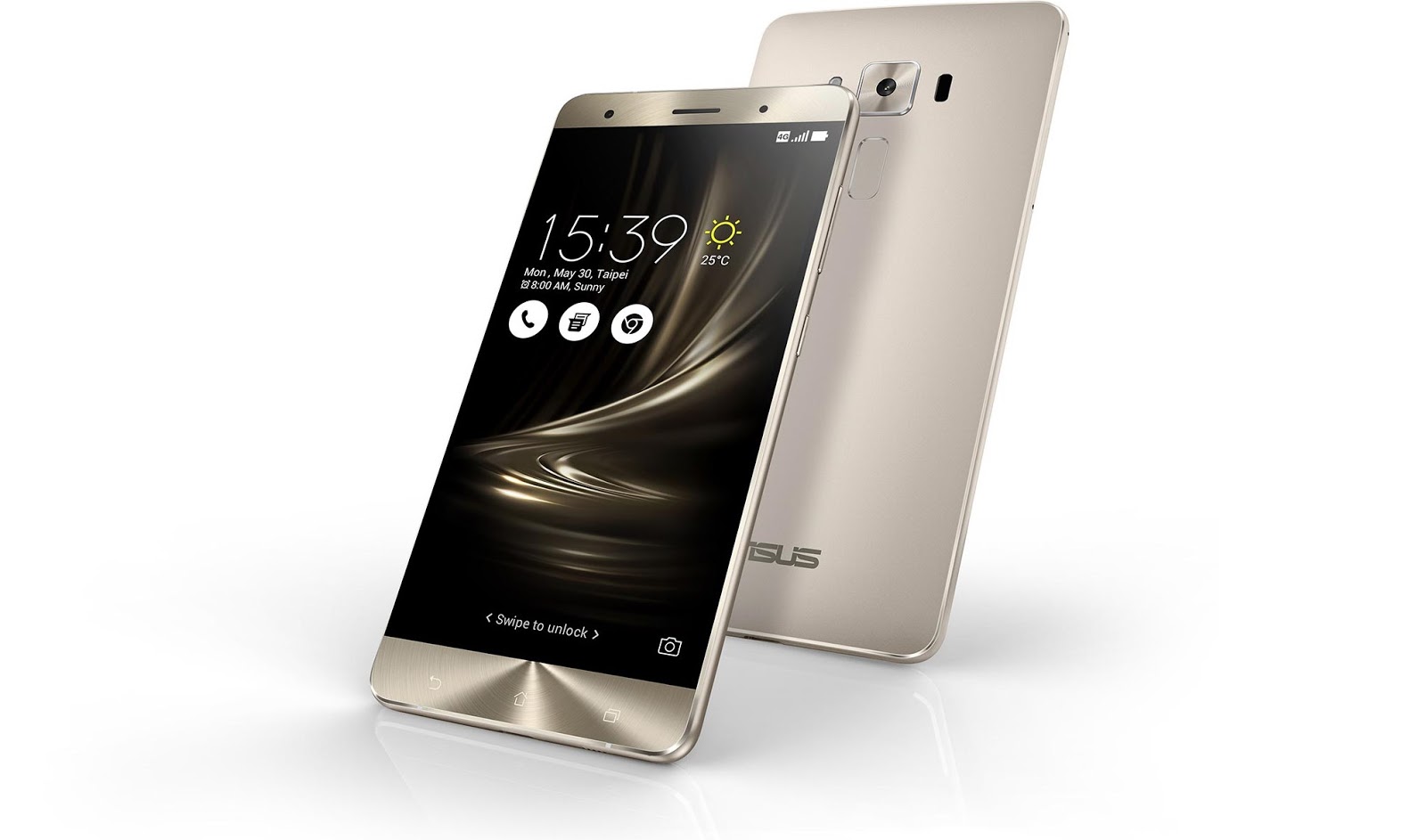
The second variant is called the Asus ZenFone 3 Deluxe. It is priced at $499, and comes with a "full metal body with an invisible antenna design", which Asus claims is the world's first. It features a 5.7-inch full-HD (1080 x1920 pixels) Super Amoled display, and is powered by the Snapdragon 820 SoC paired with 6GB of RAM. The smartphone stores 64GB of inbuilt storage, with expansion via microSD card (up to 256GB).
The Asus ZenFone 3 Deluxe sports a 23-megapixel rear camera with Sony IMX318 sensor with 4K video support. It packs a 3000mAh battery that supports fast charging (Qualcomm Quick Charge 3.0) It supports connectivity options like WiFi 802.11ac, Bluetooth 4.2, Cat 6 LTE, and USB 3.0 Type-C connector. The Deluxe will be available in Gold, Silver, and Grey colour options. It is expected to hit the market in the third quarter of this year.
And lastly, a larger brother of both the phones, Asus ZenFone 3 Ultra that comes with a 6.8-inch full-HD (1920x1080 pixels) IPS LCD display. It is priced at $479, and is powered by a Snapdragon 625 SoC paired with 4GB of RAM. The inbuilt storage is 64GB, which can be expanded via microSD card (up to 128GB).
The smartphone houses a 23-megapixel rear camera with Sony IMX318 sensor. The ZenFone 3 Ultra (ZU680KL) packs a nice 4600mAh battery with Quick Charge technology. The connectivity options include WiFi 802.11ac, Bluetooth 4.2, Cat 6 LTE, and USB 3.0 Type-C connector. The smartphone will be available in Grey, Silver, and Pink colour options.
This is something different, and maybe on trend: a home robot. The robot can roam around independently, and take directions by voice command. ZenBo's face also acts as a touchpad interface: you'll be able to place video calls, shop online, as well as stream video content, when it's not blushing!
#Zenbo is here! Personal assistant, entertainment system, companion and storyteller by @ASUS
Zenbo looks a lot like a Eve from Wall-E, but appears to work like Amazon's Echo, providing recipe recommendations and similar services in response to voice queries. Users can also Zenbo to buy goods online, logging into accounts and inputting passwords with their voice, and take photos like an autonomous selfie stick.
The robot can also sing songs, dance to music, and tell stories, even promising to work as a tutor to children. The device stands about knee height to an average adult, comes equipped with a robotic voice that's somehow already grating, and will cost $599 when it rolls into homes.